
Pelvic Organ Prolapse Surgery in Istanbul, Turkey
Advanced Surgical Treatment for Pelvic Organ Prolapse
Pelvic Organ Prolapse Surgery in Istanbul, Turkey, offers surgical treatment options for women experiencing pelvic floor weakness and the descent of pelvic organs into or through the vaginal canal.
Pelvic organ prolapse (POP) occurs when the muscles, ligaments, and connective tissues supporting the uterus, bladder, rectum, and vaginal walls become weakened. This may cause vaginal bulging, pelvic pressure, urinary problems, bowel dysfunction, and discomfort during daily activities.
At our gynecology clinic in Istanbul, patients can receive an individualized gynecological assessment and information about surgical treatment options for pelvic organ prolapse. Depending on the type and severity of prolapse, treatment may involve vaginal reconstructive surgery, uterine suspension, laparoscopic procedures, or pelvic floor repair.
International patients considering pelvic organ prolapse treatment in Turkey can receive information about surgical planning, hospital arrangements, recovery, and treatment costs.
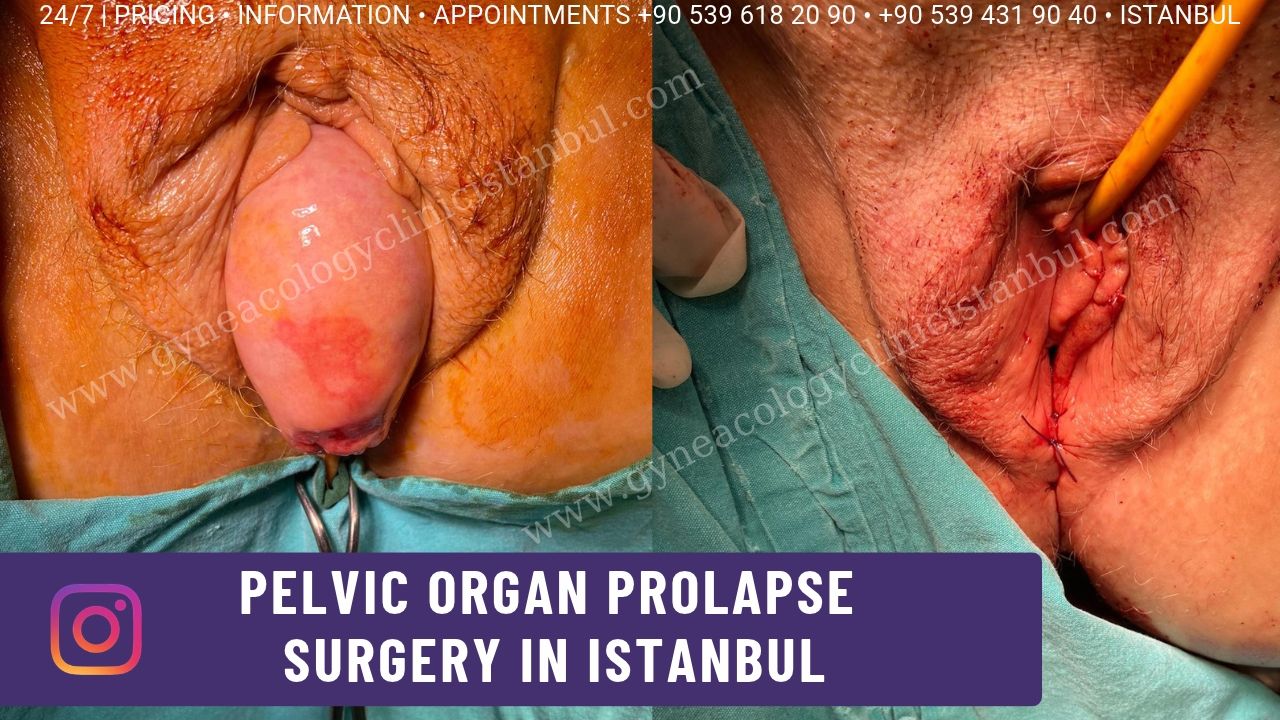
Pelvic Organ Prolapse Surgery in Istanbul, Turkey
Medical illustration representing pelvic organ prolapse, a condition involving the descent of pelvic organs due to weakened pelvic floor support structures. Surgical treatment options include vaginal reconstructive surgery, uterine suspension, and laparoscopic pelvic floor reconstruction in Istanbul, Turkey.
WHAT IS PELVIC ORGAN PROLAPSE?
Pelvic organ prolapse is a condition in which one or more pelvic organs descend from their normal anatomical position because of weakness or damage to the supporting pelvic floor structures.
The pelvic floor consists of muscles, ligaments, and connective tissues that support the pelvic organs and contribute to urinary and bowel control.
Depending on the affected anatomical compartment, pelvic organ prolapse can be classified into several types.
1. Anterior Vaginal Wall Prolapse (Cystocele)
Anterior vaginal wall prolapse occurs when the bladder descends toward the vaginal opening due to weakness of the supporting vaginal tissues.
Common symptoms include:
A bulge or pressure sensation in the vagina.
Difficulty emptying the bladder.
Frequent urination.
Urinary leakage in some patients.
Discomfort during physical activity.
2. Posterior Vaginal Wall Prolapse (Rectocele)
Posterior vaginal wall prolapse occurs when the rectum pushes against the posterior vaginal wall.
Possible symptoms include:
Vaginal bulging.
Difficulty with bowel movements.
A sensation of incomplete bowel emptying.
The need to apply pressure to the vaginal wall to assist defecation.
Pelvic pressure or discomfort.
3. Uterine Prolapse
Uterine prolapse occurs when the uterus descends into the vaginal canal because of weakened pelvic support structures.
Depending on its severity, the cervix or uterus may descend toward or beyond the vaginal opening.
Symptoms may include pelvic heaviness, vaginal bulging, lower abdominal pressure, and difficulties with daily activities.
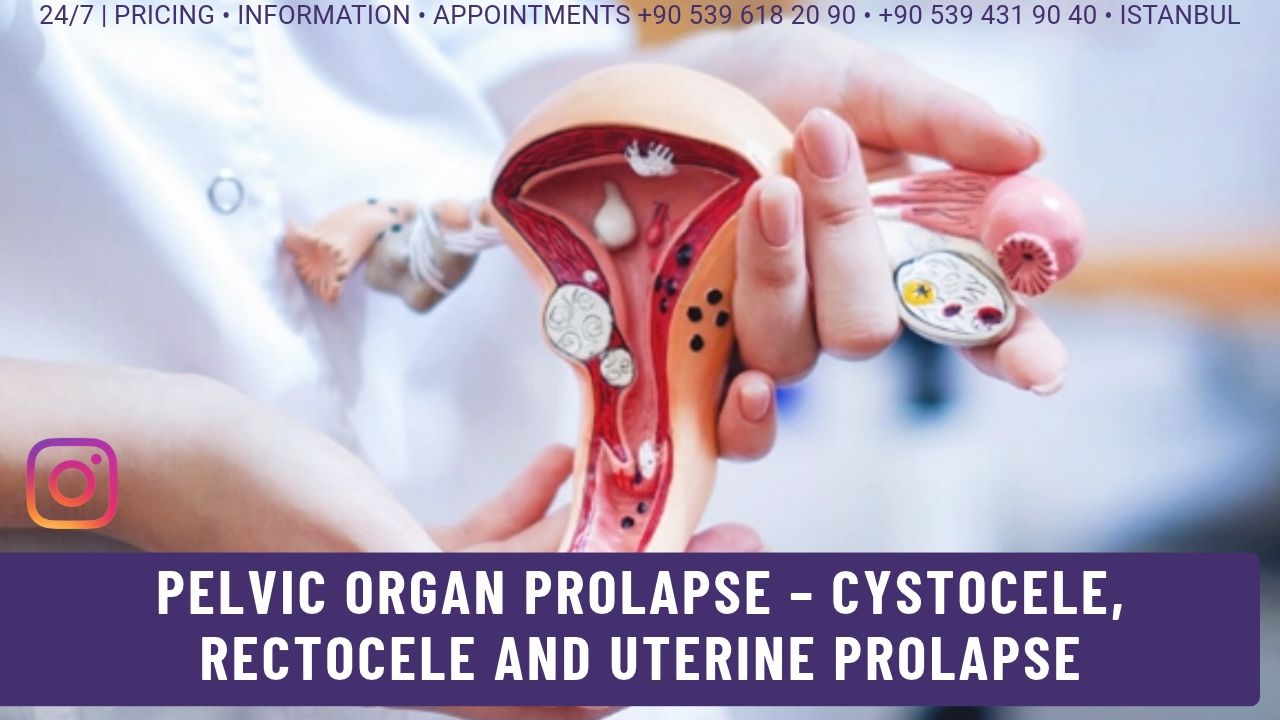
Gynecologist
A gynecologist
4. Vaginal Vault Prolapse
Vaginal vault prolapse may occur after hysterectomy when the upper portion of the vagina loses its normal supporting structures.
The vaginal apex may descend into the vaginal canal, sometimes together with other pelvic organ prolapse defects.
WHEN IS PELVIC ORGAN PROLAPSE SURGERY NECESSARY?
Not every patient with pelvic organ prolapse requires surgery.
Treatment depends on the severity of prolapse, symptoms, physical examination findings, medical history, and personal preferences.
Surgical treatment may be considered when:
Vaginal bulging or pelvic pressure significantly affects daily life.
Conservative treatment has not provided sufficient improvement.
The patient experiences persistent urinary or bowel symptoms associated with prolapse.
The prolapse causes significant discomfort or functional limitations.
The patient prefers surgical correction after discussing available treatment options.
Treatment may also include pelvic floor muscle training, vaginal pessaries, and other non-surgical approaches.
The decision to proceed with surgery should be made after a comprehensive gynecological evaluation.
TYPES OF PELVIC ORGAN PROLAPSE SURGERY
The surgical approach is selected according to the affected pelvic compartment, prolapse severity, previous operations, sexual function, reproductive preferences, and overall health.
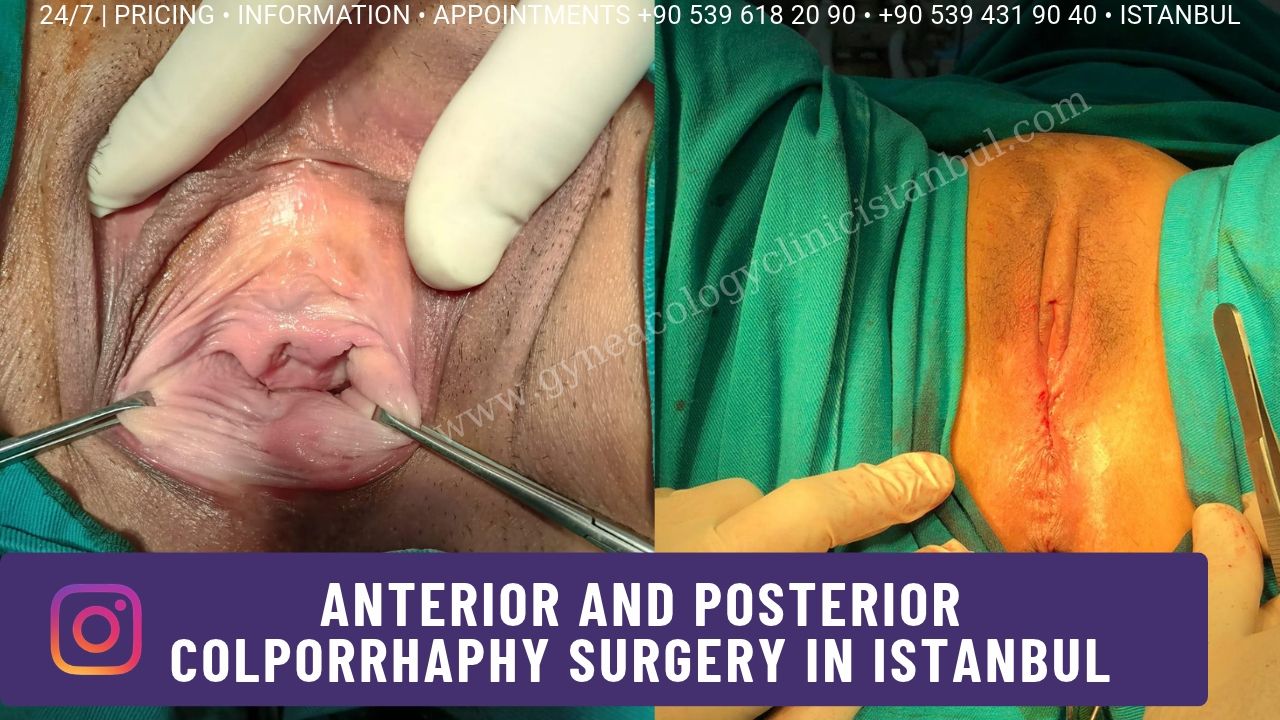
Anterior and Posterior Colporrhaphy Surgery in Istanbul
Surgical medical illustration demonstrating anterior colporrhaphy for bladder support and posterior colporrhaphy for rectal support. These vaginal reconstructive procedures use sutures to reinforce weakened pelvic support tissues and correct selected cases of vaginal wall prolapse in Istanbul, Turkey.
1. Anterior Colporrhaphy (Anterior Vaginal Wall Repair)
Anterior colporrhaphy is a vaginal surgical procedure used to correct anterior vaginal wall prolapse, commonly known as cystocele.
During the procedure:
An incision is made in the anterior vaginal wall.
The weakened supporting tissues are identified.
The underlying supportive layer is reinforced with sutures.
Excess vaginal tissue may be removed when clinically appropriate.
The vaginal incision is closed.
The purpose is to improve bladder support and restore the normal anatomy of the anterior vaginal wall.
2. Posterior Colporrhaphy (Posterior Vaginal Wall Repair)
Posterior colporrhaphy is performed to correct posterior vaginal wall prolapse, commonly associated with rectocele.
The procedure involves vaginal surgical access to the posterior vaginal wall, identification of weakened supporting tissues, and reinforcement with sutures.
The objective is to improve rectal support and reduce the vaginal bulge associated with posterior compartment prolapse.
Additional perineal repair may be considered when there is associated perineal body weakness.
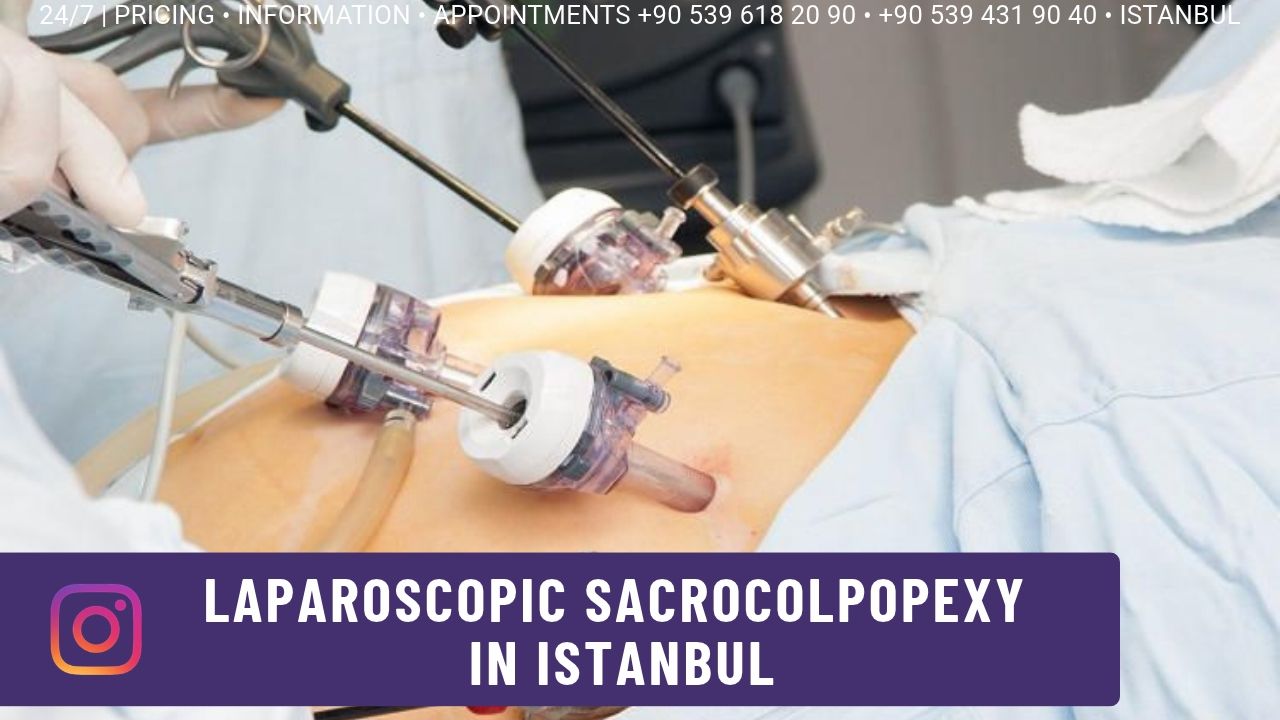
Laparoscopic Sacrocolpopexy in Istanbul, Turkey
Detailed surgical illustration showing laparoscopic sacrocolpopexy, a reconstructive procedure used primarily for vaginal vault prolapse. The vaginal apex is suspended toward the sacrum using graft material, commonly synthetic mesh, to restore pelvic support. This surgical technique is available for selected patients following specialist evaluation in Istanbul, Turkey.
3. Vaginal Hysterectomy for Uterine Prolapse
Vaginal hysterectomy may be considered in selected women with uterine prolapse, particularly when uterine preservation is not desired or appropriate.
During vaginal hysterectomy, the uterus is removed through the vaginal route.
An important part of surgical planning is to provide adequate support to the vaginal apex. Procedures such as uterosacral ligament suspension or sacrospinous ligament fixation may be performed to reduce the risk of postoperative vaginal vault prolapse.
Hysterectomy alone does not correct every pelvic floor support defect. Associated prolapse compartments should be evaluated and addressed when indicated.
4. Uterine-Sparing Prolapse Surgery (Hysteropexy)
Some women with uterine prolapse prefer to preserve their uterus.
Uterine-sparing procedures, collectively known as hysteropexy, aim to restore uterine support without removing the uterus.
Depending on the patient’s anatomy and clinical suitability, surgical options may include:
Vaginal sacrospinous hysteropexy using sutures.
Uterosacral ligament hysteropexy.
Laparoscopic sacrohysteropexy in selected cases.
Manchester repair in appropriately selected patients.
The benefits, limitations, recurrence risks, and possible complications of each approach should be discussed before surgery.
5. Laparoscopic Sacrocolpopexy
Laparoscopic sacrocolpopexy is a reconstructive surgical procedure used primarily for vaginal vault prolapse and selected cases of pelvic organ prolapse.
The operation is performed through small abdominal incisions using a laparoscope and specialized surgical instruments.
In this procedure, the vaginal apex is suspended toward the sacrum using a supporting graft material, commonly synthetic mesh.
The aim is to restore vaginal support while maintaining vaginal anatomy.
Potential benefits include:
Minimally invasive abdominal access.
Restoration of vaginal support.
Treatment of selected cases of vaginal vault prolapse.
Avoidance of a large abdominal incision.
Mesh-related complications, including mesh exposure, infection, pain, and erosion into adjacent organs, must be discussed as part of informed consent.
6. Sacrospinous Ligament Fixation
Sacrospinous ligament fixation is a vaginal reconstructive procedure used to support the vaginal apex.
The vaginal apex is attached to the sacrospinous ligament using permanent or delayed-absorbable sutures, depending on the surgical technique.
It may be performed during vaginal hysterectomy or as part of vaginal vault prolapse repair.
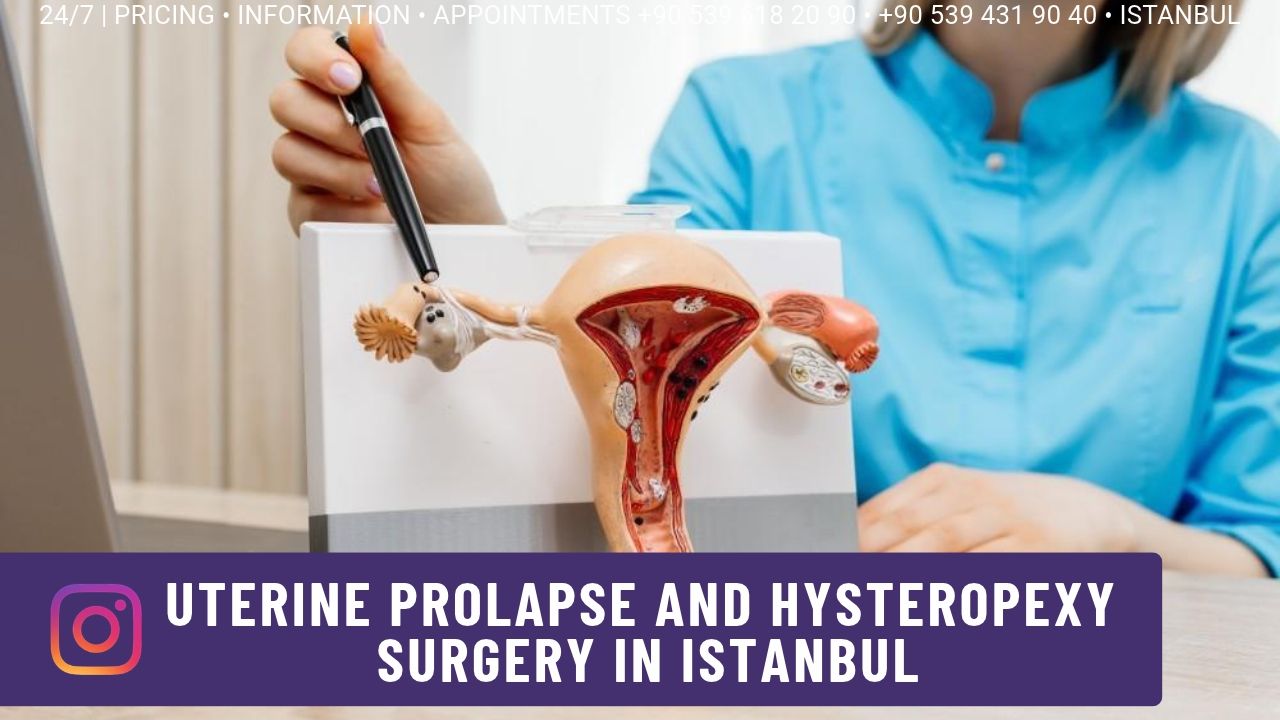
Uterine Prolapse and Hysteropexy Surgery in Istanbul
Anatomical medical illustration demonstrating uterine prolapse and the concept of hysteropexy. Uterine-sparing surgical techniques aim to restore the anatomical position of the uterus while preserving it. Depending on the patient's condition, vaginal or laparoscopic suspension procedures may be considered.
LAPAROSCOPIC PELVIC FLOOR RECONSTRUCTION IN ISTANBUL
Laparoscopic pelvic floor reconstruction allows selected prolapse conditions to be treated through minimally invasive abdominal surgery.
Depending on the clinical diagnosis, laparoscopic procedures may include:
-
Laparoscopic sacrocolpopexy.
-
Laparoscopic sacrohysteropexy.
-
Selected pelvic support procedures.
The choice of laparoscopic surgery depends on the patient’s anatomy, previous operations, medical history, and the surgeon’s assessment.
Not every type of pelvic organ prolapse requires laparoscopic surgery. Vaginal reconstructive procedures may be more appropriate in certain patients.
DIAGNOSIS AND PREOPERATIVE EVALUATION
Accurate diagnosis is essential before planning pelvic organ prolapse surgery.
The preoperative assessment may include:
-
Detailed gynecological history.
-
Pelvic examination.
-
Assessment of anterior, posterior, and apical vaginal support.
-
Evaluation of urinary and bowel symptoms.
-
Assessment of previous pelvic floor operations.
-
Urinary investigations when clinically indicated.
-
Additional imaging or urodynamic testing when required.
The Pelvic Organ Prolapse Quantification (POP-Q) system may be used to document the anatomical extent of prolapse.
This structured examination helps determine the appropriate surgical approach.
RECOVERY AFTER PELVIC ORGAN PROLAPSE SURGERY
Recovery depends on the type of operation, surgical route, and individual healing process.
After vaginal reconstructive surgery, patients may experience temporary vaginal discomfort, pelvic pressure, light bleeding, and changes in bowel or bladder function.
After laparoscopic surgery, mild abdominal discomfort, bloating, and temporary shoulder pain may also occur.
Postoperative recommendations commonly include:
-
Following the prescribed medication plan.
-
Keeping surgical wounds clean and dry.
-
Avoiding heavy lifting during the recommended recovery period.
-
Avoiding vaginal intercourse until the surgeon confirms adequate healing.
-
Preventing constipation and excessive straining.
-
Attending scheduled postoperative examinations.
The timing of return to work, exercise, and sexual activity depends on the procedure and the patient’s recovery.
RISKS AND POSSIBLE COMPLICATIONS
Pelvic organ prolapse surgery is intended to improve pelvic support and reduce prolapse-related symptoms. However, recurrence and surgical complications are possible.
Potential complications include:
-
Bleeding.
-
Infection.
-
Injury to the bladder, ureters, bowel, or blood vessels.
-
Urinary retention or difficulty emptying the bladder.
-
New or persistent urinary incontinence.
-
Pain during sexual intercourse.
-
Changes in bowel or urinary function.
-
Recurrent pelvic organ prolapse.
-
Mesh exposure or mesh-related complications when mesh is used.
The possibility of recurrence and the potential need for additional treatment should be discussed before surgery.
The specific risks depend on the procedure selected and the patient’s individual clinical circumstances.
PELVIC ORGAN PROLAPSE SURGERY COST IN ISTANBUL, TURKEY
The cost of Pelvic Organ Prolapse Surgery in Istanbul depends on the type of prolapse, surgical technique, anesthesia, hospital requirements, and whether additional procedures are necessary.
The estimated surgical package price starts from 1250 USD.
The final cost is determined after reviewing the patient’s medical history, examination findings, and proposed surgical treatment.
Patients considering pelvic floor reconstruction in Turkey can contact our clinic for information about consultation, surgical planning, hospital arrangements, and treatment costs.
PELVIC ORGAN PROLAPSE SURGERY FOR INTERNATIONAL PATIENTS
Istanbul is an established destination for international patients seeking gynecological and pelvic reconstructive surgery.
International patients considering pelvic organ prolapse surgery in Istanbul can receive assistance with:
-
Initial medical consultation.
-
Review of previous medical records.
-
Gynecological examination and prolapse assessment.
-
Surgical technique planning.
-
Hospital and anesthesia arrangements.
-
Postoperative care and follow-up planning.
Patients are encouraged to provide previous surgical reports, imaging results, and relevant medical records before traveling.
The recommended length of stay in Istanbul depends on the surgical procedure, postoperative recovery, and the treating physician’s assessment.
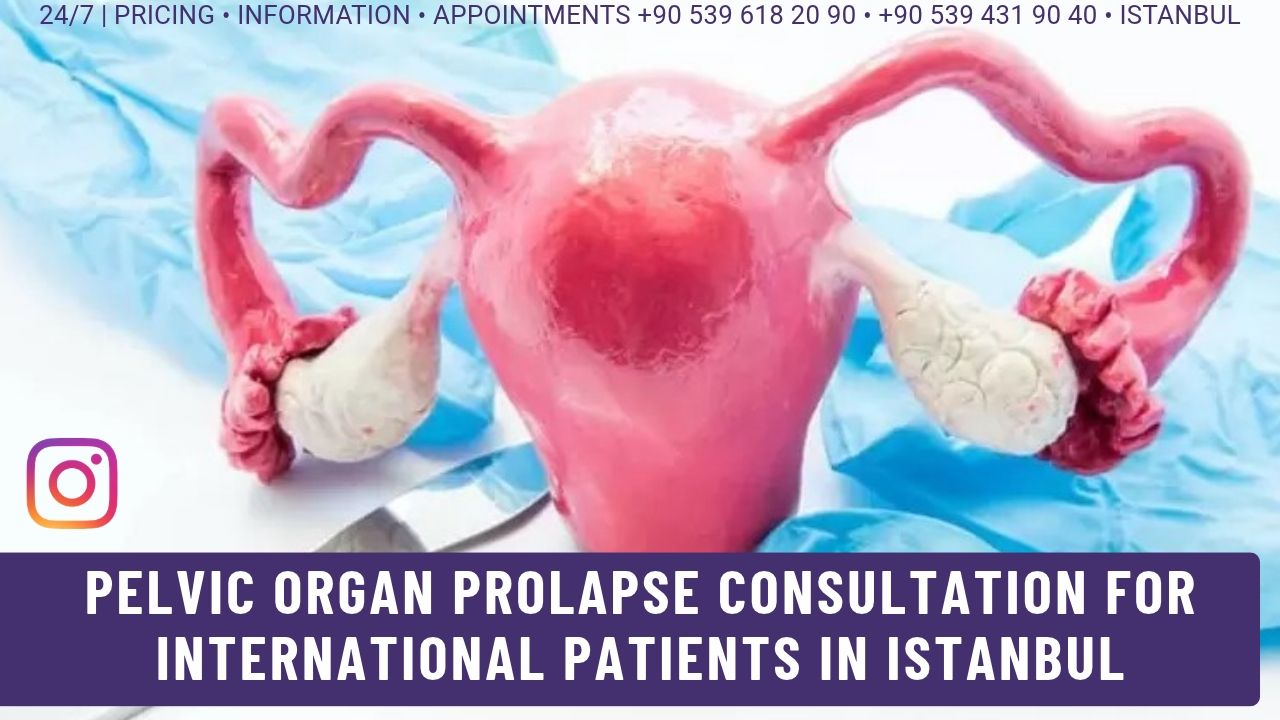
Pelvic Organ Prolapse Consultation for International Patients in Istanbul
Modern gynecology consultation setting representing the evaluation of pelvic organ prolapse and discussion of surgical treatment options. International patients can receive information about vaginal reconstructive surgery, laparoscopic procedures, recovery, hospital arrangements, and pelvic organ prolapse surgery cost in Istanbul.
Frequently Asked Questions About Pelvic Organ Prolapse Surgery in Istanbul, Turkey
What is the most common surgery for pelvic organ prolapse?
The most appropriate procedure depends on the affected compartment. Anterior colporrhaphy, posterior colporrhaphy, vaginal apical suspension, hysteropexy, and sacrocolpopexy are among the available surgical approaches.
Can uterine prolapse be treated without removing the uterus?
Yes. Selected patients may undergo uterine-sparing procedures such as vaginal sacrospinous hysteropexy or other appropriate suspension techniques.
Is laparoscopic surgery used for pelvic organ prolapse?
Yes. Laparoscopic sacrocolpopexy and sacrohysteropexy are options for selected patients, depending on the type of prolapse and clinical assessment.
Does pelvic organ prolapse surgery improve urinary symptoms?
It may improve urinary symptoms related to prolapse. However, some patients may develop or continue to experience urinary incontinence after surgery. Preoperative evaluation is important.
Can pelvic organ prolapse return after surgery?
Yes. Recurrence is possible after any prolapse repair. The risk depends on the surgical procedure, pelvic floor anatomy, and individual factors.
Is mesh always necessary for prolapse surgery?
No. Many prolapse procedures use the patient’s own tissues and sutures without synthetic mesh. Mesh may be used in selected abdominal or laparoscopic reconstructive procedures after discussing its benefits and potential complications.
How long does recovery take after prolapse surgery?
Recovery varies according to the surgical technique. Patients should follow their surgeon’s instructions regarding physical activity, lifting, work, and sexual intercourse.
SCHEDULE A CONSULTATION IN ISTANBUL
If you are experiencing vaginal bulging, pelvic pressure, urinary difficulties, or symptoms associated with pelvic organ prolapse, a gynecological evaluation can help determine the most appropriate treatment.
Our clinic in Istanbul provides consultation and surgical planning for women considering pelvic organ prolapse treatment.
Contact us for information about surgical options, treatment costs, and arrangements for international patients.
Phone / WhatsApp:
+90 539 618 20 90
+90 539 431 90 40
Planning Pelvic Organ Prolapse Surgery in Istanbul?
If you are considering Pelvic Organ Prolapse Surgery in Istanbul, you can contact our clinic to discuss your medical needs and appointment planning.
For international patients, consultation, ultrasound assessment, surgical treatment and postoperative care can be planned according to the individual medical situation.
Book a Consultation
Contact Us
Table of Contents
Toggle