
Bartholin Cyst Surgery in Istanbul, Turkey
Bartholin Cyst Surgery in Istanbul offers effective surgical options for women experiencing recurrent Bartholin cysts, painful gland swellings and Bartholin abscesses. Depending on the clinical findings, surgical treatment may involve Word catheter placement, Bartholin cyst marsupialization or, in selected cases, complete Bartholin gland excision.
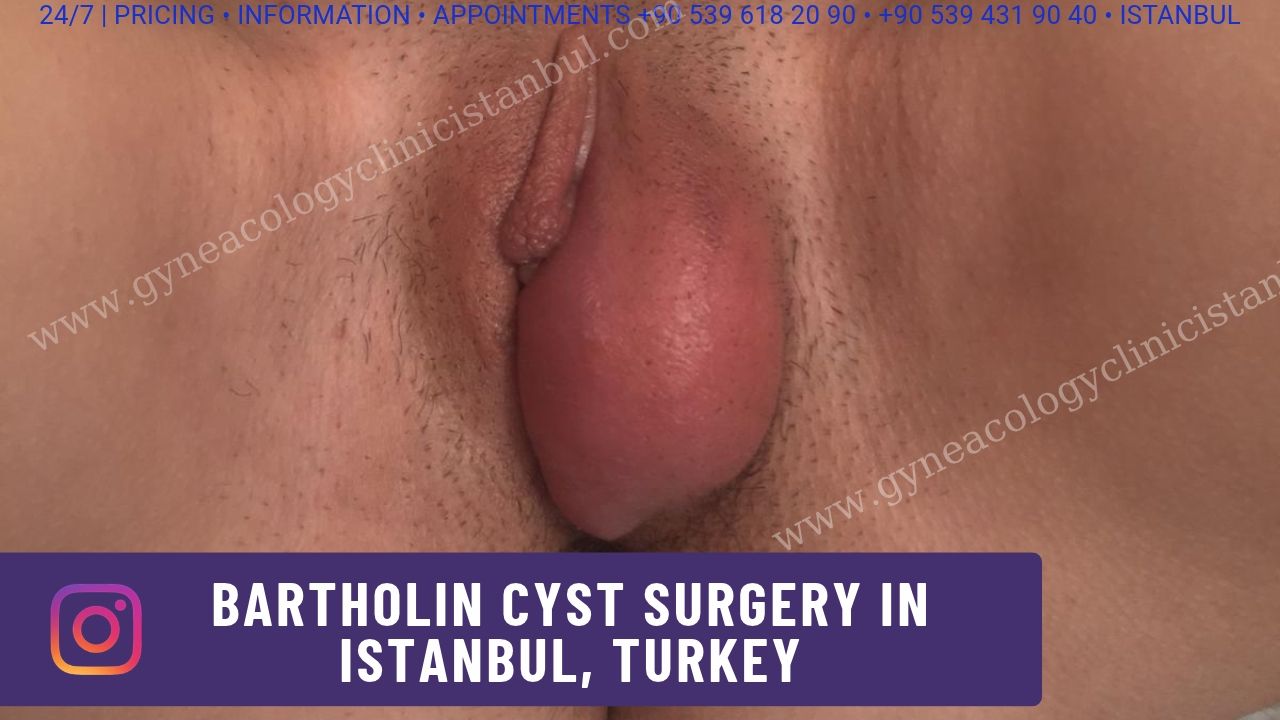
Bartholin Cyst Surgery in Istanbul, Turkey
Professional medical illustration representing Bartholin Cyst Surgery in Istanbul, Turkey. The image highlights the Bartholin gland anatomy and surgical treatment approaches, including Word catheter drainage, marsupialization and selected gland excision procedures for international patients.
Bartholin cysts develop when the duct of a Bartholin gland becomes obstructed, causing fluid to accumulate near the vaginal opening. When infection develops, an abscess may form, resulting in significant pain, swelling and difficulty with daily activities.
At our gynecology clinic in Istanbul, Turkey, each patient undergoes an individualized gynecological assessment to determine the most appropriate surgical approach. We provide evaluation, surgical treatment planning and postoperative care for both local and international patients.
When Is Bartholin Cyst Surgery Necessary?
Not every Bartholin cyst requires surgery. Small, asymptomatic cysts may be monitored without intervention.
However, surgical treatment may be recommended when a Bartholin cyst or abscess causes significant symptoms or does not resolve with conservative management.
Common indications for a surgical procedure include:
A large Bartholin cyst causing discomfort or pressure.
A painful Bartholin abscess.
Difficulty sitting, walking or performing daily activities.
Pain during sexual intercourse.
Recurrent Bartholin cysts or abscesses.
Persistent swelling despite previous treatment.
Failure of previous drainage procedures.
Selected atypical lesions requiring surgical assessment and tissue diagnosis.
The purpose of Bartholin cyst surgery is not simply to empty the cyst. The main objective of appropriate drainage procedures is to establish a new drainage pathway and reduce the likelihood of recurrence.
The choice of procedure depends on the size and characteristics of the lesion, infection status, previous treatments and the patient’s clinical needs.
What Is a Bartholin Cyst?
The Bartholin glands are two small glands located on either side of the vaginal opening, within the vulvar vestibule.
They produce a fluid that contributes to lubrication of the vaginal entrance. Each gland releases its secretion through a small duct.
When the duct becomes blocked, fluid accumulates inside the gland and forms a Bartholin cyst.
A cyst may remain small and painless. However, it can gradually enlarge and cause vulvar swelling, pressure and discomfort.
If bacteria infect the accumulated fluid, a Bartholin abscess may develop. This can cause intense pain, tenderness, redness and difficulty walking or sitting.
Bartholin Cyst vs. Bartholin Abscess
A Bartholin cyst and a Bartholin abscess are related conditions, but they are not identical.
Bartholin Cyst
A cyst develops due to obstruction of the gland duct. It may present as a unilateral swelling near the vaginal opening and may remain painless unless it becomes large or inflamed.
Bartholin Abscess
An abscess develops when infection occurs within the cyst or gland. Typical symptoms include:
Severe vulvar pain.
Rapidly increasing swelling.
Redness and local tenderness.
Warmth around the affected area.
Pain while sitting or walking.
Purulent or unpleasant-smelling discharge.
Fever or general discomfort in some patients.
An established abscess may require surgical drainage. Antibiotics alone are not always sufficient to resolve a collection of pus.
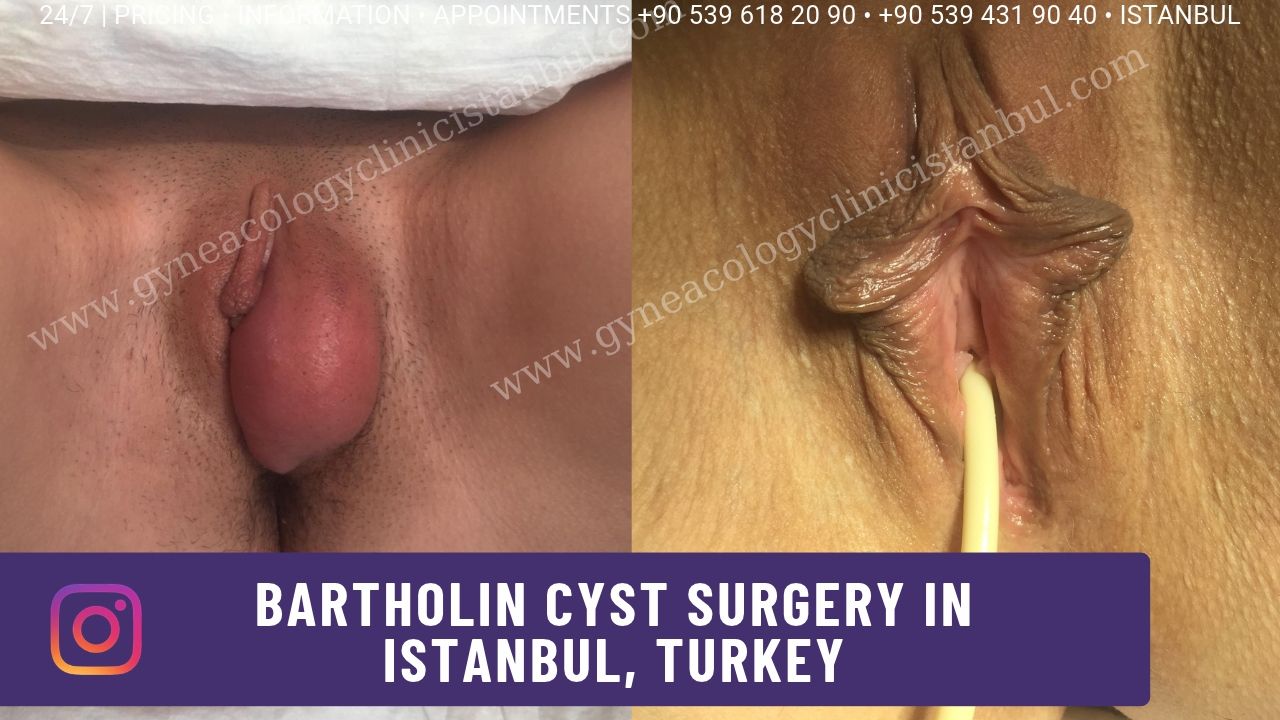
Word Catheter Surgery for Bartholin Cyst in Istanbul, Turkey
Detailed surgical illustration showing the Word catheter technique for Bartholin cyst and abscess treatment. Following a small incision and drainage, a balloon catheter is inserted into the cavity to maintain a drainage pathway while a new epithelialized tract develops. Word catheter treatment is one of the minimally invasive surgical options available for selected patients in Istanbul, Turkey.
Bartholin Cyst Surgery Options in Istanbul
Different surgical procedures are available for Bartholin cysts and abscesses. The most appropriate technique is selected according to the clinical examination and the patient’s treatment history.
1. Word Catheter Procedure for Bartholin Cyst
Word catheter placement is a minimally invasive surgical drainage technique used for selected symptomatic Bartholin cysts and abscesses.
It is commonly considered for patients with a first or selected recurrent episode, particularly when the cyst or abscess is sufficiently large to accommodate the catheter.
How Is Word Catheter Surgery Performed?
The procedure is generally performed under local anesthesia.
The affected area is cleaned and anesthetized.
A small incision is made over the cyst or abscess.
The accumulated fluid or pus is drained.
A small silicone catheter with an inflatable balloon is inserted into the cavity.
The balloon is filled with sterile fluid to help keep the catheter in place.
The catheter maintains drainage while a new epithelialized tract develops.
The Word catheter is generally intended to remain in place for approximately 4 weeks, although the duration depends on healing and clinical assessment.
Advantages of Word Catheter Treatment
Minimally invasive surgical approach.
Usually performed under local anesthesia.
Short procedure time.
No need for complete gland removal.
Allows continued drainage during healing.
Can often be performed without a prolonged hospital stay.
The catheter may cause temporary discomfort or occasionally become displaced before the drainage tract has fully developed. Follow-up instructions are therefore important.
2. Bartholin Cyst Marsupialization Surgery
Marsupialization is a surgical procedure that creates a lasting drainage opening in the Bartholin cyst cavity.
It may be recommended for recurrent cysts or abscesses, for selected patients in whom Word catheter treatment is unsuitable, or when marsupialization is preferred after discussing the available options.
How Is Bartholin Cyst Marsupialization Performed?
The procedure involves:
Appropriate anesthesia and surgical preparation.
A small incision over the cyst.
Drainage of accumulated fluid or pus.
Opening and examination of the cyst cavity.
Suturing the edges of the cyst wall to the surrounding vestibular tissue.
Creation of a new drainage opening.
Absorbable sutures are generally used.
The new opening allows gland secretions to drain rather than accumulating again within a closed cavity.
Marsupialization can be performed under local or general anesthesia, depending on the patient’s condition, the extent of the procedure and the surgical plan.
Advantages of Marsupialization
Creates a lasting drainage opening.
Avoids routine complete removal of the Bartholin gland.
Can be used in selected recurrent cases.
Provides an alternative when Word catheter placement is unsuitable.
Allows drainage of the cyst cavity during healing.
Postoperative swelling, tenderness and temporary discharge may occur. The healing process and return to normal activities depend on the extent of the procedure.
3. Bartholin Gland Excision Surgery
Bartholin gland excision is the surgical removal of the affected gland.
Unlike Word catheter placement and marsupialization, which aim to preserve the gland and establish drainage, excision removes the gland itself.
This is a more extensive procedure and is generally reserved for selected cases.
When Is Bartholin Gland Excision Necessary?
Possible indications include:
Recurrent cysts or abscesses despite previous treatment.
Persistent or atypical Bartholin gland masses.
Suspicious solid or irregular lesions.
Clinical concern requiring histopathological examination.
Selected cases in which less invasive surgical approaches have failed.
The Bartholin gland is located close to important blood vessels and surrounding soft tissues. Therefore, surgical excision requires careful anatomical planning and appropriate surgical expertise.
Potential Advantages
Removes the affected gland.
Provides tissue for histopathological examination.
May be appropriate for selected patients with repeated recurrence or suspicious lesions.
Possible Risks
Bleeding.
Hematoma.
Infection.
Postoperative pain.
Scar formation.
Wound-healing problems.
Dyspareunia or local discomfort.
Complete gland excision is not a routine first-line procedure for every Bartholin cyst.
Which Bartholin Cyst Surgery Is Most Appropriate?
There is no single surgical technique that is ideal for every patient.
The decision depends on the size of the cyst, whether an abscess is present, the number of previous episodes and the patient’s clinical circumstances.
Word Catheter: A minimally invasive drainage option, often suitable for an initial symptomatic cyst or abscess.
Marsupialization: A surgical option that creates a lasting drainage opening and may be particularly useful in recurrent cases or when catheter placement is unsuitable.
Bartholin Gland Excision: A more extensive operation reserved for selected recurrent or atypical cases and situations requiring tissue diagnosis.
The surgical plan should be individualized after gynecological examination.
Is Bartholin Cyst Surgery Performed Under Local or General Anesthesia?
The type of anesthesia depends on the selected procedure and the patient’s clinical condition.
Local Anesthesia
Word catheter placement is generally performed under local anesthesia. Selected marsupialization procedures may also be performed using local anesthesia.
General Anesthesia
General anesthesia may be preferred for more extensive marsupialization procedures, complex cases or complete Bartholin gland excision.
The anesthesia plan is determined after evaluating the patient and discussing the planned operation.
Recovery After Bartholin Cyst Surgery
Recovery varies according to the surgical technique, the size of the lesion and the presence of infection.
After Word catheter placement or marsupialization, patients may experience:
Mild vulvar swelling.
Local tenderness.
Temporary discomfort while sitting.
Light discharge.
Minor spotting.
After Bartholin gland excision, recovery may take longer because the procedure involves more extensive surgical dissection.
Postoperative Care
General recommendations may include:
Keeping the vulvar area clean.
Following the recommended wound-care instructions.
Avoiding irritating hygiene products.
Using prescribed pain medication when necessary.
Wearing comfortable underwear and clothing.
Attending the recommended postoperative examination.
Avoiding sexual intercourse until the surgical area has healed sufficiently and the treating physician approves.
Fever, increasing pain, significant bleeding, worsening swelling or spreading redness should prompt medical assessment.
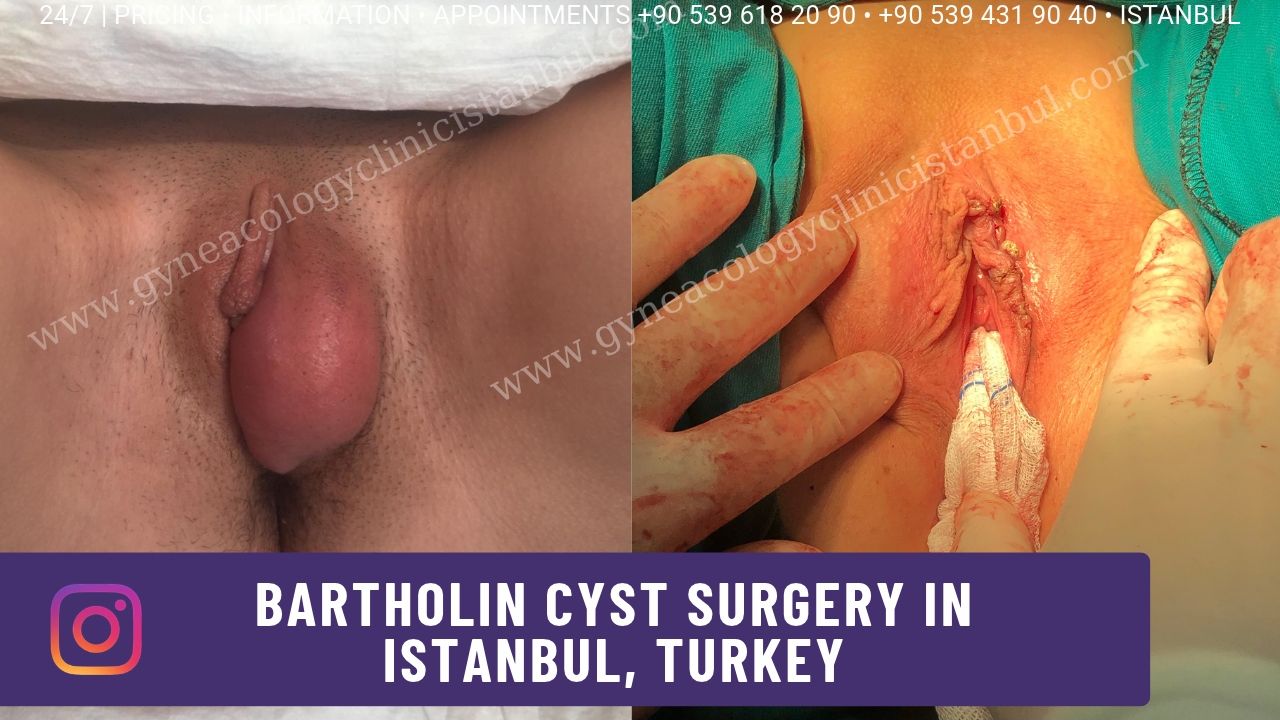
Bartholin Cyst Marsupialization Surgery in Istanbul
Detailed gynecological surgical illustration demonstrating Bartholin cyst marsupialization. The cyst is opened and drained, and the edges of the cyst wall are sutured to the surrounding vestibular tissue to establish a lasting drainage opening. Marsupialization is an important surgical option for selected patients with recurrent Bartholin cysts or abscesses.
Can Bartholin Cyst Return After Surgery?
Yes. Recurrence is possible after treatment.
Word catheter placement and marsupialization aim to establish a new drainage pathway, but neither procedure guarantees that another cyst will never develop.
Recurrent cases require reassessment to determine whether another drainage procedure, marsupialization or, in selected circumstances, gland excision is appropriate.
The treatment history and characteristics of the recurrent lesion are important in surgical planning.
Possible Complications of Bartholin Cyst Surgery
As with other surgical procedures, Bartholin cyst surgery has potential risks.
Possible complications include:
-
Postoperative pain and swelling.
-
Bleeding or hematoma.
-
Wound infection.
-
Delayed healing.
-
Scar formation.
-
Recurrence of the cyst or abscess.
-
Discomfort during sexual intercourse.
-
Complications related to anesthesia.
The risk profile differs between drainage procedures, marsupialization and complete gland excision.
A preoperative consultation helps identify relevant risk factors and determine the most appropriate surgical approach.
Diagnosis Before Bartholin Cyst Surgery
A gynecological examination is essential before selecting a surgical procedure.
The assessment includes:
-
Location and size of the swelling.
-
Presence of tenderness, redness or infection.
-
Whether the lesion is cystic or has atypical characteristics.
-
Previous episodes and treatment history.
-
Relevant medical history and current symptoms.
Additional investigations may be recommended when necessary.
Biopsy and Histopathological Examination
A new Bartholin gland mass in women aged 40 years or older, particularly after menopause, requires careful evaluation. Biopsy or excision for histopathological examination may be recommended to exclude a rare Bartholin gland malignancy.
Solid, fixed, irregular or otherwise atypical lesions also require further assessment.
Infection Assessment
When an abscess is present, microbiological testing may be considered in selected cases. Testing for sexually transmitted infections may be recommended according to clinical findings and individual risk factors.
Are Antibiotics Necessary After Bartholin Cyst Surgery?
Antibiotics are not routinely necessary for every patient undergoing drainage.
They may be considered when there is surrounding cellulitis, systemic infection, fever, relevant microbiological findings or other clinical risk factors.
For an established abscess, drainage is often an essential component of treatment.
The decision to prescribe antibiotics, including the choice and duration, is made according to the clinical findings.
Bartholin Cyst Surgery Cost in Istanbul, Turkey
The cost of Bartholin Cyst Surgery in Istanbul depends on the surgical technique, anesthesia requirements and clinical characteristics of the patient.
Factors that may affect the total cost include:
-
Word catheter placement or marsupialization.
-
Bartholin gland excision when indicated.
-
Local or general anesthesia.
-
Surgical facility and operating room requirements.
-
Additional diagnostic investigations.
-
Histopathological examination when necessary.
-
Postoperative care and follow-up.
Bartholin cyst surgery prices start from 500 USD.
The final price is determined after gynecological evaluation and confirmation of the appropriate surgical procedure.
International patients can contact our clinic to receive information about treatment options, estimated costs and appointment planning.
Bartholin Cyst Surgery for International Patients
Our clinic in Istanbul, Turkey provides gynecological evaluation and surgical treatment planning for international patients seeking Bartholin cyst surgery.
The treatment pathway generally includes:
1. Initial Consultation
The patient’s symptoms, medical history, previous procedures and treatment expectations are reviewed.
2. Gynecological Examination
The Bartholin gland and surrounding tissues are examined to determine the nature of the lesion and whether surgical treatment is indicated.
3. Surgical Planning
The appropriate procedure is discussed, including Word catheter placement, marsupialization or selected gland excision.
Anesthesia options, expected recovery and potential complications are also explained.
4. Surgical Procedure
The planned treatment is performed according to the patient’s clinical findings and the agreed surgical approach.
5. Postoperative Follow-up
Patients receive postoperative care instructions and an individualized follow-up plan.
For international patients, travel arrangements should be planned according to the procedure and healing requirements.
Patients receiving a Word catheter should be aware that it generally remains in place for approximately 4 weeks. Follow-up and catheter removal arrangements must therefore be discussed before travel.
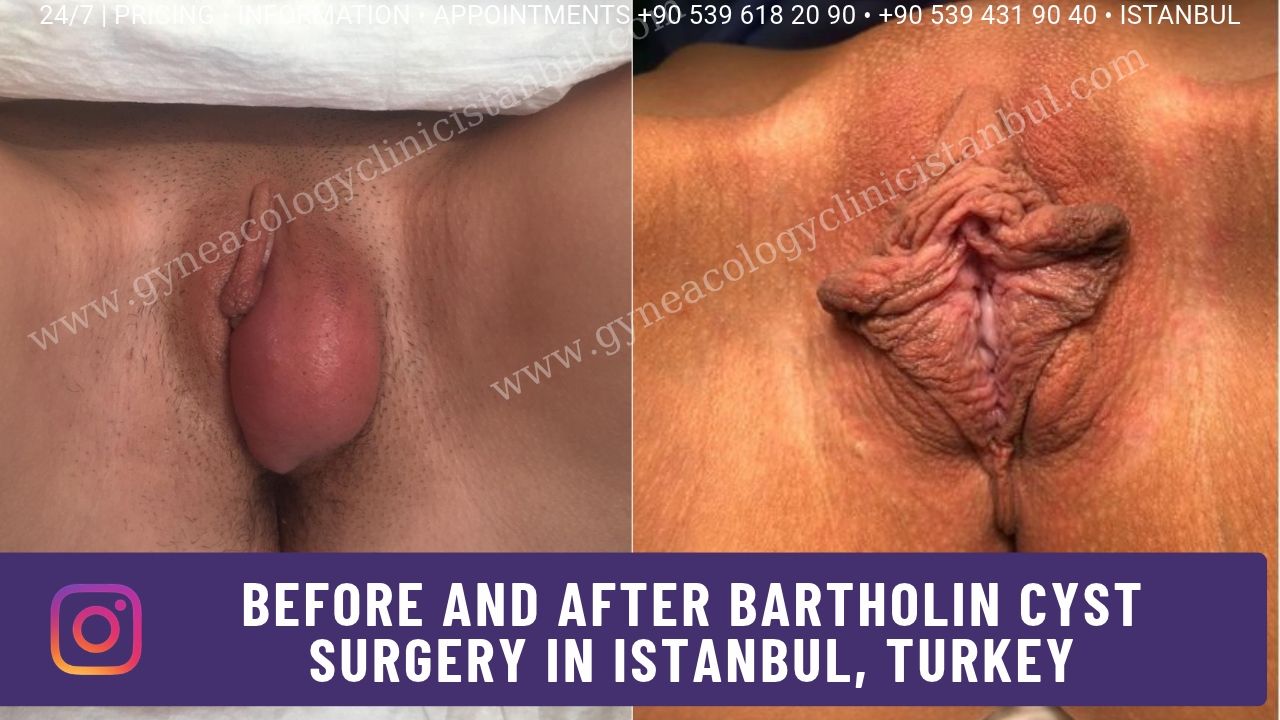
Before and After Bartholin Cyst Surgery in Istanbul, Turkey
Medical educational comparison illustrating the appearance of a Bartholin cyst before and after surgical treatment. The visual demonstrates the reduction of cyst-related swelling following an appropriate surgical procedure. Bartholin Cyst Surgery in Istanbul, Turkey may involve Word catheter placement, marsupialization or selected gland excision, depending on the patient's clinical condition.
Frequently Asked Questions About Bartholin Cyst Surgery
Is Bartholin cyst surgery necessary?
Not every Bartholin cyst requires surgery. Small, painless cysts may be monitored. Surgical drainage or another procedure may be recommended when the cyst causes significant symptoms, develops into an abscess or repeatedly recurs.
What is the best operation for a Bartholin cyst?
The appropriate procedure depends on the clinical situation. Word catheter placement, marsupialization and gland excision are different approaches with different indications. No single technique is suitable for every patient.
Is Bartholin cyst marsupialization a major operation?
Marsupialization is generally a relatively limited gynecological surgical procedure. It involves opening the cyst and suturing its edges to create a lasting drainage opening. The anesthesia and clinical setting depend on the individual case.
Is Word catheter treatment a surgical procedure?
Yes. It involves a small incision, drainage of the cyst or abscess and placement of a catheter to maintain a drainage pathway. It is generally performed under local anesthesia.
How long does a Word catheter stay in place?
It is generally intended to remain in place for approximately 4 weeks, depending on healing and clinical assessment.
Is Bartholin gland removal necessary?
Complete gland removal is not routinely necessary. It may be considered in selected patients with recurrent disease, persistent atypical lesions or clinical suspicion requiring histopathological assessment.
Can Bartholin cyst surgery affect sexual intercourse?
A large cyst or abscess may cause pain during intercourse. Temporary discomfort may also occur after surgery. Sexual activity should be resumed after adequate healing and when the treating physician considers it appropriate.
Can a Bartholin cyst recur after marsupialization?
Yes. Although marsupialization creates a lasting drainage opening, recurrence remains possible. Further treatment depends on the clinical findings and previous surgical history.
How much does Bartholin cyst surgery cost in Istanbul?
The cost depends on the selected procedure, anesthesia and clinical requirements. Prices start from YYYY USD, with the final cost determined after examination.
Book a Bartholin Cyst Surgery Consultation in Istanbul
If you are experiencing recurrent Bartholin cysts, painful vulvar swelling or a Bartholin abscess, a gynecological examination can help determine whether surgical treatment is necessary.
Our clinic in Istanbul, Turkey provides individualized assessment and surgical planning for patients considering Bartholin Cyst Surgery.
We welcome both local and international patients seeking professional gynecological care.
For information, surgery costs and appointments, contact our clinic 24/7:
WhatsApp / Phone:
+90 539 618 20 90
+90 539 431 90 40
Planning Bartholin Cyst Surgery in Istanbul?
If you are considering Bartholin Cyst Surgery in Istanbul, you can contact our clinic to discuss your medical needs and appointment planning.
For international patients, consultation, ultrasound assessment, surgical treatment and postoperative care can be planned according to the individual medical situation.
Book a Consultation
Contact Us
Table of Contents
Toggle