Abnormal Uterine Bleeding Treatment in Istanbul, Turkey
Abnormal uterine bleeding (AUB) refers to bleeding from the uterus that differs from normal menstrual patterns in frequency, regularity, duration, or volume. It is a common gynecological condition that can affect women during their reproductive years and the menopausal transition.
Heavy menstrual bleeding, prolonged periods, irregular cycles, bleeding between periods, and unexpected vaginal bleeding may indicate an underlying gynecological or hormonal condition.
At our gynecology clinic in Istanbul, Turkey, abnormal uterine bleeding is evaluated through a comprehensive clinical assessment, appropriate imaging, and diagnostic procedures when necessary. Treatment is planned according to the underlying cause, the patient’s age, reproductive plans, medical history, and severity of symptoms.
Women seeking abnormal uterine bleeding treatment in Istanbul can receive an individualized evaluation and discuss medical and surgical treatment options. International patients are welcome to contact our clinic for consultation arrangements.
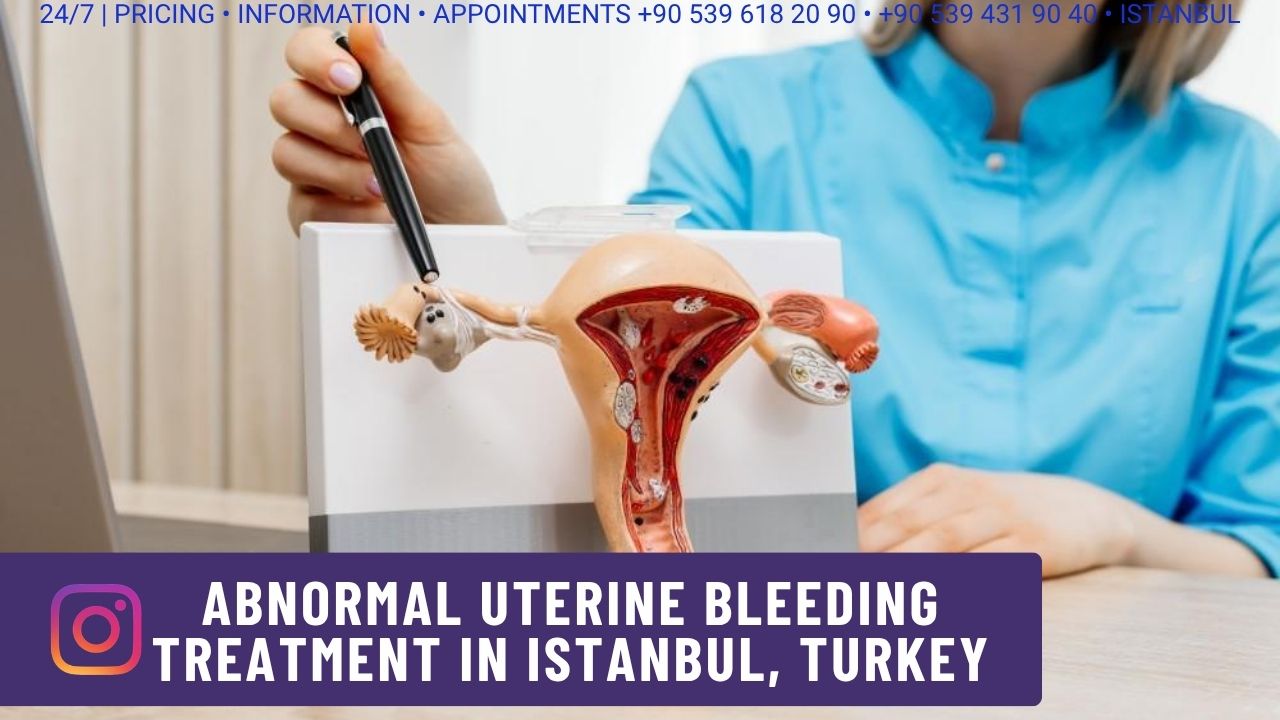
Abnormal Uterine Bleeding Treatment in Istanbul, Turkey
Medical illustration explaining the differences between normal menstrual cycles and abnormal uterine bleeding, including changes in menstrual duration, frequency and bleeding volume. This educational visual supports Abnormal Uterine Bleeding Treatment in Istanbul, Turkey.
What Is Abnormal Uterine Bleeding?
Abnormal uterine bleeding describes menstrual bleeding that differs from an individual’s expected menstrual pattern.
It may involve:
Excessively heavy menstrual bleeding
Menstrual periods lasting longer than usual
Frequent menstrual bleeding
Infrequent menstrual periods
Irregular menstrual cycles
Bleeding between menstrual periods
Unexpected bleeding after sexual intercourse when the source is uterine or cervical
Unscheduled bleeding associated with hormonal treatment
Abnormal bleeding may occur due to structural problems in the uterus, hormonal disturbances, disorders of blood coagulation, medication effects, or endometrial conditions.
The first step in treatment is identifying the underlying cause.
Symptoms of Abnormal Uterine Bleeding
Symptoms vary depending on the cause and severity of the bleeding.
Common symptoms include:
Heavy menstrual flow
Passing large blood clots
Menstrual bleeding lasting longer than seven days
Frequent changes of sanitary pads or tampons
Bleeding between menstrual periods
Irregular menstrual cycles
Unexpected spotting
Fatigue and weakness
Dizziness
Shortness of breath related to anemia
Pelvic pain or pressure
Heavy or prolonged bleeding may result in iron deficiency and anemia. Women experiencing significant blood loss should receive appropriate clinical assessment.
Causes of Abnormal Uterine Bleeding
The causes of abnormal uterine bleeding are commonly classified using the FIGO PALM-COEIN system.
This classification separates structural uterine causes from non-structural causes.
Structural Causes – PALM
1. Endometrial Polyps (P)
Endometrial polyps are localized overgrowths of endometrial tissue within the uterine cavity. They may cause intermenstrual bleeding, irregular menstruation, or heavy menstrual bleeding.
Hysteroscopic polypectomy allows direct visualization and removal of the polyp, with tissue available for histopathological examination.
2. Adenomyosis (A)
Adenomyosis occurs when endometrial-type tissue is present within the myometrium. It may cause heavy menstrual bleeding, painful periods, and an enlarged or tender uterus.
Treatment depends on symptom severity, uterine findings, and reproductive plans.
3. Leiomyoma or Uterine Fibroids (L)
Uterine fibroids are benign smooth muscle tumors of the uterus. Submucosal fibroids, which extend into the uterine cavity, are particularly associated with heavy menstrual bleeding.
Treatment options include medical management, hysteroscopic myomectomy, abdominal myomectomy, laparoscopic myomectomy, and hysterectomy in selected cases.
4. Malignancy and Endometrial Hyperplasia (M)
Endometrial hyperplasia refers to abnormal proliferation of the endometrial lining. Some forms, particularly those with atypia, may carry a risk of progression to endometrial cancer.
Abnormal uterine bleeding, especially in women with risk factors or after menopause, requires appropriate evaluation to exclude endometrial pathology.
Non-Structural Causes – COEIN
1. Coagulopathy (C)
Bleeding disorders may contribute to excessive menstrual blood loss. Von Willebrand disease is one example of an inherited coagulation disorder associated with heavy menstrual bleeding.
2. Ovulatory Dysfunction (O)
Irregular or absent ovulation may cause unpredictable endometrial stimulation and irregular bleeding.
It can occur during adolescence, perimenopause, and in conditions such as polycystic ovary syndrome (PCOS).
3. Endometrial Causes (E)
Some women experience heavy menstrual bleeding despite apparently normal uterine anatomy and regular ovulatory cycles. Local endometrial mechanisms may contribute to excessive bleeding.
4. Iatrogenic Causes (I)
Certain medications and medical devices may affect menstrual bleeding patterns.
Examples include hormonal contraception, intrauterine devices, anticoagulants, and other medications.
5. Not Otherwise Classified (N)
Some less common conditions do not fit into the other categories and require individualized investigation.
Abnormal Uterine Bleeding Diagnosis in Istanbul
Accurate diagnosis is essential before selecting abnormal uterine bleeding treatment in Istanbul.
The evaluation aims to determine the bleeding pattern, identify possible structural or hormonal causes, assess the impact of blood loss, and exclude significant endometrial pathology.
1. Gynecological History and Examination
The assessment may include:
Age and menstrual history
Duration and frequency of bleeding
Amount of menstrual blood loss
Presence of intermenstrual bleeding
Pelvic pain or pressure
Pregnancy history
Contraceptive use
Previous gynecological procedures
Medication history
Personal or family history of bleeding disorders
Risk factors for endometrial hyperplasia
A pelvic examination may be recommended according to the patient’s symptoms and clinical findings.
2. Pregnancy Test
Pregnancy-related bleeding must be excluded in women of reproductive potential.
A pregnancy test is an important part of the initial evaluation when pregnancy is possible because bleeding associated with miscarriage or ectopic pregnancy requires a different diagnostic and management approach.
3. Transvaginal Ultrasound
Transvaginal ultrasound is an important diagnostic tool for evaluating the uterus, endometrium, and ovaries.
It can help identify:
Endometrial polyps
Uterine fibroids
Adenomyosis
Endometrial abnormalities
Ovarian pathology
Structural changes of the uterus
The ultrasound findings are interpreted together with the patient’s age, menstrual status, symptoms, and clinical history.
4. Blood Tests
Laboratory investigations depend on the patient’s clinical presentation.
They may include:
Complete blood count (CBC)
Ferritin and iron studies when indicated
Pregnancy testing
Thyroid function tests when symptoms suggest thyroid disease
Coagulation studies when a bleeding disorder is suspected
Additional hormonal investigations in selected patients
A complete blood count is important in women with heavy menstrual bleeding to evaluate possible anemia.
5. Endometrial Biopsy
Endometrial sampling may be necessary to evaluate endometrial hyperplasia or malignancy.
It is particularly considered in women with abnormal uterine bleeding who are aged 45 or older, and in younger women with persistent bleeding, prolonged unopposed estrogen exposure, relevant risk factors, or unsuccessful medical treatment.
The decision and method of sampling are individualized according to clinical findings and local diagnostic pathways.
6. Diagnostic Hysteroscopy
Hysteroscopy allows direct visualization of the uterine cavity using a thin optical instrument introduced through the cervix.
It can help identify:
Endometrial polyps
Submucosal fibroids
Intrauterine adhesions
Abnormal endometrial areas
Other intracavitary lesions
When indicated, hysteroscopy can also be combined with targeted biopsy or operative treatment.
Abnormal Uterine Bleeding Treatment Options in Istanbul, Turkey
Treatment is selected according to the underlying cause, severity of bleeding, age, reproductive plans, and patient preferences.
Some women benefit from medication, while others require hysteroscopic procedures or more extensive gynecological surgery.
1. Medical Treatment
Medical treatment is often the initial approach for women without a significant structural abnormality or when conservative management is clinically appropriate.
Depending on the patient’s medical history and contraindications, options may include:
Tranexamic Acid
Tranexamic acid is a non-hormonal medication that helps reduce menstrual blood loss by inhibiting the breakdown of blood clots.
It is generally used during menstrual bleeding and may be suitable for selected women with heavy periods.
Non-Steroidal Anti-Inflammatory Drugs (NSAIDs)
NSAIDs may reduce menstrual blood loss and help relieve menstrual pain in selected patients.
Hormonal Contraception
Combined hormonal contraceptives may help regulate menstrual cycles and reduce menstrual blood loss.
Progestogen Treatment
Cyclic or continuous progestogen treatment may be considered for women with ovulatory dysfunction or other appropriate indications.
Levonorgestrel-Releasing Intrauterine System (LNG-IUS)
An LNG-IUS can be an effective option for heavy menstrual bleeding in appropriately selected women, particularly when there is no significant distortion of the uterine cavity.
Treatment selection requires assessment of contraindications, reproductive preferences, and the suspected cause of bleeding.
2. Hysteroscopic Polypectomy
Endometrial polyps are an important structural cause of abnormal uterine bleeding.
Hysteroscopic polypectomy is a minimally invasive procedure that allows the surgeon to visualize the uterine cavity and remove the polyp under direct vision.
Potential indications include:
Intermenstrual bleeding
Persistent abnormal uterine bleeding
Symptomatic endometrial polyps
Selected fertility-related indications
Polyps requiring histopathological assessment
The removed tissue is generally sent for histopathological examination.
3. Hysteroscopic Myomectomy
Submucosal fibroids can contribute to heavy or prolonged menstrual bleeding.
Hysteroscopic myomectomy is used to remove suitable fibroids that protrude into the uterine cavity.
The procedure is performed through the cervix without an abdominal incision.
The surgical approach depends on:
Fibroid size
Location
Depth of myometrial involvement
Number of fibroids
Uterine cavity anatomy
Patient’s reproductive plans
Some fibroids require staged treatment or an alternative surgical approach.
4. Endometrial Ablation
Endometrial ablation is a procedure designed to reduce or control menstrual bleeding by treating the endometrial lining.
It may be considered for selected women with heavy menstrual bleeding who have completed their reproductive plans and have not achieved satisfactory improvement with appropriate medical treatment.
Important considerations include:
Exclusion of endometrial malignancy and significant pathology
Assessment of uterine cavity anatomy
Appropriate patient selection
Discussion of alternative treatments
Understanding that future pregnancy is not recommended after ablation
Endometrial ablation is not a contraceptive procedure. Pregnancy can still occur and may carry serious risks after treatment. Effective contraception is therefore necessary if pregnancy remains possible.
5. Hysterectomy for Persistent Abnormal Uterine Bleeding
Hysterectomy is the surgical removal of the uterus and provides definitive cessation of uterine menstrual bleeding.
It may be considered for selected women with severe or persistent symptoms who have completed childbearing and for whom less invasive treatments are unsuitable, unsuccessful, or not preferred.
Depending on the clinical situation, hysterectomy may be performed through:
Abdominal hysterectomy
Laparoscopic hysterectomy
Vaginal hysterectomy
The surgical route is selected according to uterine size, underlying pathology, previous surgeries, pelvic anatomy, medical history, and patient preferences.
Hysterectomy is a major surgical procedure and requires detailed discussion of benefits, alternatives, and potential complications.
Abnormal Uterine Bleeding During Perimenopause
Hormonal fluctuations during perimenopause may lead to irregular ovulation and changes in menstrual bleeding patterns.
Women may experience:
Irregular menstrual cycles
Heavy menstrual bleeding
Prolonged periods
Shortened or lengthened cycle intervals
Intermenstrual spotting
Although hormonal changes are common during this stage, persistent or significant abnormal bleeding should not automatically be attributed to perimenopause.
Depending on age and risk factors, evaluation may include ultrasound, hysteroscopy, and endometrial sampling.
Postmenopausal Bleeding
Postmenopausal bleeding is any vaginal bleeding occurring after menopause has been established.
It should always be evaluated, even when the amount of bleeding is small.
Possible causes include:
Vaginal or endometrial atrophy
Endometrial polyps
Endometrial hyperplasia
Endometrial cancer
Hormone therapy-related bleeding
Other gynecological conditions
Transvaginal ultrasound and endometrial sampling may be used according to clinical findings and risk assessment.
Postmenopausal bleeding requires a separate diagnostic approach and should not be managed as ordinary menstrual irregularity.
Abnormal Uterine Bleeding and Fertility
The underlying cause of abnormal uterine bleeding may also affect reproductive health.
Endometrial polyps, submucosal fibroids, adenomyosis, and ovulatory disorders may be associated with fertility problems in some women.
Treatment should take future pregnancy plans into account.
For women who wish to preserve fertility, appropriate options may include:
Medical management
Hysteroscopic polypectomy
Hysteroscopic myomectomy
Treatment of ovulatory dysfunction
Individualized management of adenomyosis
Hysterectomy and endometrial ablation are not appropriate options for women who wish to carry a future pregnancy.
Abnormal Uterine Bleeding Treatment Cost in Istanbul, Turkey
The cost of abnormal uterine bleeding treatment in Istanbul depends on the underlying diagnosis, investigations required, and selected treatment method.
The overall cost may include:
Gynecological consultation
Transvaginal ultrasound
Blood tests
Endometrial biopsy
Diagnostic hysteroscopy
Operative hysteroscopy
Endometrial polyp removal
Hysteroscopic myomectomy
Anesthesia and clinical facility costs
Postoperative follow-up
Abnormal uterine bleeding consultation and treatment prices start from YYYY USD.
A personalized cost estimate can be provided after clinical evaluation and confirmation of the recommended treatment approach.
Abnormal Uterine Bleeding Treatment for International Patients
Our clinic in Istanbul, Turkey welcomes international patients seeking evaluation and treatment for abnormal uterine bleeding.
The consultation process is organized to help patients travelling from abroad receive an appropriate diagnostic assessment and individualized treatment plan.
International patients can:
Contact our clinic to request an appointment.
Share their menstrual history and symptoms.
Provide previous ultrasound reports and laboratory results.
Attend a gynecological consultation in Istanbul.
Undergo appropriate imaging and diagnostic investigations.
Discuss medical or surgical treatment options.
Receive postoperative instructions and follow-up recommendations when a procedure is performed.
Previous hysteroscopy reports, endometrial biopsy results, and pathology reports can be particularly helpful when planning further treatment.
Frequently Asked Questions About Abnormal Uterine Bleeding Treatment in Istanbul
What is considered abnormal uterine bleeding?
Bleeding is considered abnormal when it differs from expected menstrual patterns in frequency, regularity, duration, or volume. It may include heavy periods, prolonged bleeding, irregular cycles, or bleeding between periods.
What is the most common cause of heavy menstrual bleeding?
There are several possible causes, including uterine fibroids, adenomyosis, endometrial polyps, ovulatory dysfunction, and endometrial-related disorders. The cause varies between patients and requires appropriate assessment.
Can abnormal uterine bleeding be treated without surgery?
Yes. Many women can be treated with medication, hormonal therapy, tranexamic acid, or a levonorgestrel-releasing intrauterine system. Surgery is considered when structural abnormalities are present or other treatments are unsuccessful or unsuitable.
Is hysteroscopy necessary for abnormal uterine bleeding?
Not every patient requires hysteroscopy. It is particularly useful when an endometrial polyp, submucosal fibroid, or other uterine cavity abnormality is suspected.
Does an endometrial polyp cause irregular bleeding?
Yes. Endometrial polyps may cause intermenstrual bleeding, irregular menstruation, or heavy menstrual bleeding. Symptomatic polyps can often be removed hysteroscopically.
When is an endometrial biopsy necessary?
Endometrial sampling may be recommended in women aged 45 or older with abnormal uterine bleeding and in younger women with persistent symptoms or relevant risk factors for endometrial hyperplasia or malignancy.
Is bleeding after menopause normal?
No. Any vaginal bleeding after menopause requires medical evaluation. Although many causes are benign, endometrial hyperplasia and malignancy must be appropriately excluded.
Can abnormal uterine bleeding affect fertility?
It depends on the underlying cause. Conditions such as submucosal fibroids, endometrial polyps, and ovulatory dysfunction may affect reproductive health. Treatment should be planned according to future pregnancy goals.
How much does abnormal uterine bleeding treatment cost in Istanbul?
The cost depends on the diagnosis, investigations, and whether medical or surgical treatment is required. Prices start from YYYY USD, with a personalized estimate provided after clinical assessment.
Book an Abnormal Uterine Bleeding Consultation in Istanbul, Turkey
Persistent heavy periods, irregular menstrual cycles, prolonged bleeding, or unexpected vaginal bleeding should not be ignored.
A comprehensive gynecological evaluation can help identify the underlying cause and determine the most appropriate medical or surgical treatment.
At our clinic in Istanbul, Turkey, we provide individualized assessment and treatment planning for abnormal uterine bleeding, including hysteroscopic procedures and selected gynecological surgeries.
For appointments, treatment information, and international patient inquiries:
Phone / WhatsApp:
+90 539 618 20 90
+90 539 431 90 40
Contact our clinic to arrange your gynecological consultation in Istanbul.
Planning Abnormal Uterine Bleeding Treatment in Istanbul?
If you are considering Abnormal Uterine Bleeding Treatment in Istanbul, you can contact our clinic to discuss your medical needs and appointment planning.
For international patients, consultation, ultrasound assessment, surgical treatment and postoperative care can be planned according to the individual medical situation.
Book a Consultation
Contact Us
Table of Contents
Toggle