Ovarian Cyst Treatment in Istanbul, Turkey
Advanced Gynecological Evaluation and Laparoscopic Ovarian Cyst Surgery
Ovarian cysts are fluid-filled sacs or tissue-containing structures that develop in or on the ovaries. They are common gynecological findings and may occur during reproductive years as well as after menopause.
Most ovarian cysts are benign, and many resolve spontaneously without requiring surgery. However, some cysts may cause pelvic pain, menstrual disturbances, pressure symptoms or complications such as ovarian torsion or rupture.
Ovarian cyst treatment in Istanbul requires careful evaluation of the cyst’s size, ultrasound appearance, symptoms, age, menopausal status and reproductive plans.
At our gynecology clinic in Istanbul, Turkey, patients can receive individualized assessment and discuss appropriate management options, including ultrasound follow-up, medical management when indicated and laparoscopic ovarian cyst surgery.
We also welcome international patients seeking ovarian cyst evaluation and treatment in Istanbul.
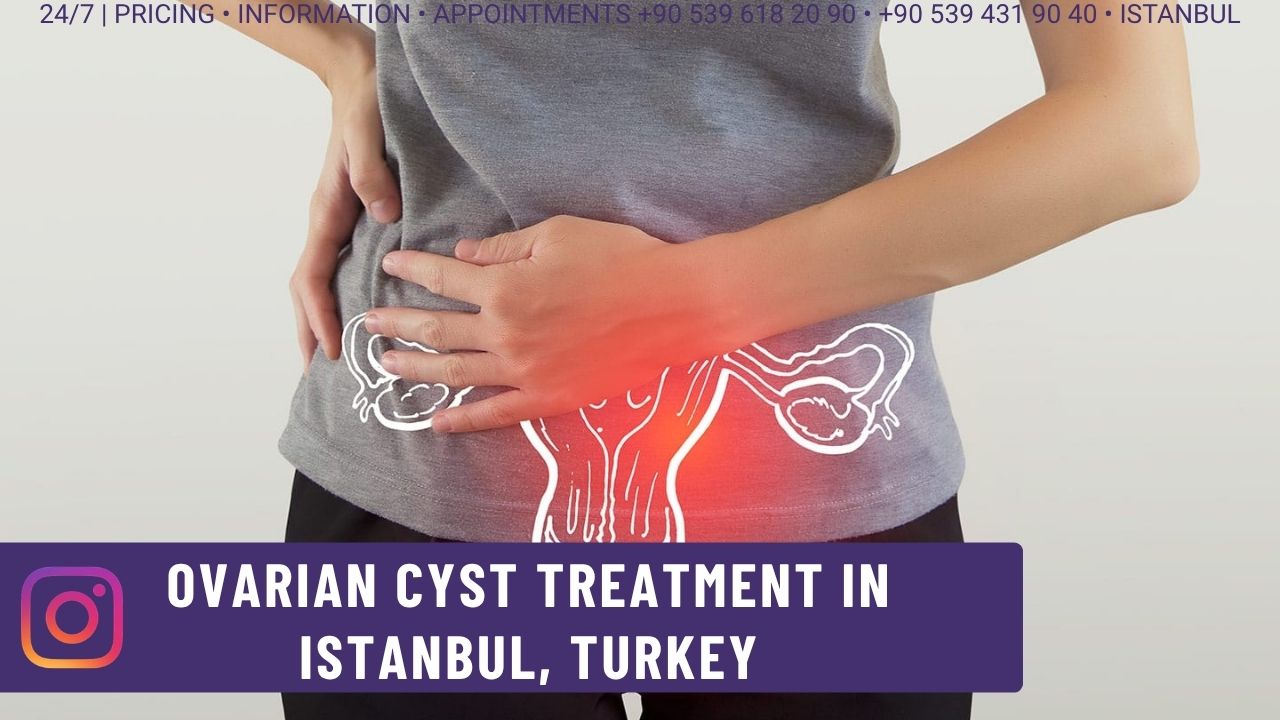
Ovarian Cyst Treatment in Istanbul, Turkey
Medical illustration representing ovarian cyst diagnosis and treatment at a gynecology clinic in Istanbul, Turkey. Information for local and international patients seeking ovarian cyst evaluation, laparoscopic surgery and personalized gynecological care.
What Is an Ovarian Cyst?
An ovarian cyst is a sac-like structure that develops within or on the surface of an ovary. It may contain fluid, blood, tissue or a combination of these components.
Ovarian cysts can develop as part of the normal menstrual cycle or arise from different ovarian conditions.
Some cysts are temporary and disappear spontaneously, while others may persist, increase in size or require further investigation.
The appropriate treatment depends on the type of cyst and the patient’s clinical findings.
Types of Ovarian Cysts
Different types of ovarian cysts have different characteristics and treatment requirements.
1. Functional Ovarian Cysts
Functional cysts are associated with the normal ovarian cycle and are among the most common ovarian cysts in reproductive-age women.
They include:
Follicular Cysts
A follicular cyst may develop when a dominant follicle does not rupture and release an egg during ovulation.
Many follicular cysts resolve spontaneously over subsequent menstrual cycles.
Corpus Luteum Cysts
After ovulation, the corpus luteum normally produces progesterone. Sometimes it accumulates fluid or blood and forms a cyst.
Most corpus luteum cysts resolve without surgical treatment.
2. Ovarian Endometrioma (Chocolate Cyst)
An ovarian endometrioma is associated with endometriosis and contains thick, old blood.
It is commonly known as a chocolate cyst because of its characteristic contents.
Endometriomas may cause:
Painful menstruation.
Chronic pelvic pain.
Deep pain during sexual intercourse.
Pelvic adhesions.
Fertility difficulties in some patients.
Treatment planning considers cyst size, symptoms, ovarian reserve, previous surgery and reproductive goals.
Laparoscopic surgery may be considered in selected cases, but unnecessary ovarian surgery should be avoided when possible.
For more information, visit our page about Endometriosis Treatment in Istanbul.
3. Dermoid Cyst (Mature Cystic Teratoma)
A dermoid cyst is a generally benign ovarian tumor that may contain different tissue types, including hair, skin and fatty material.
Dermoid cysts can occur in reproductive-age women and may increase in size over time.
Depending on their size, symptoms and imaging characteristics, they may be monitored or surgically removed.
Laparoscopic ovarian cystectomy is an option in selected patients.
4. Serous and Mucinous Cystadenomas
Cystadenomas are ovarian epithelial tumors that may contain serous or mucinous fluid.
They are frequently benign but may grow considerably and cause pelvic pressure, abdominal enlargement or discomfort.
Ultrasound characteristics and clinical risk assessment help determine the appropriate management.
5. Hemorrhagic Ovarian Cysts
Hemorrhagic cysts develop when bleeding occurs into a functional ovarian cyst.
They may cause sudden pelvic pain and can sometimes be associated with internal bleeding following rupture.
Ultrasound evaluation helps distinguish hemorrhagic cysts from other ovarian lesions.
6. Complex Ovarian Cysts
Complex ovarian cysts have ultrasound features that may include internal septations, solid components, papillary projections or other architectural characteristics.
Not every complex cyst is malignant. However, these findings may require additional assessment, expert ultrasound evaluation, selected laboratory investigations or referral to a gynecologic oncology specialist depending on the overall risk profile.
Symptoms of Ovarian Cysts
Many ovarian cysts do not cause symptoms and are discovered during routine gynecological examinations or ultrasound scans.
When symptoms occur, they may include:
Lower abdominal or pelvic pain.
Pain on one side of the pelvis.
Abdominal bloating or pressure.
Pain during sexual intercourse.
Menstrual irregularities.
Frequent urination due to pelvic pressure.
Discomfort during bowel movements.
A feeling of pelvic fullness.
Sudden severe pelvic pain, particularly when accompanied by nausea or vomiting, requires urgent medical assessment because ovarian torsion or cyst rupture may be present.
Diagnosis of Ovarian Cysts in Istanbul
Accurate diagnosis is essential for selecting the appropriate ovarian cyst treatment.
The evaluation may include the following:
1. Gynecological Examination
A pelvic examination may identify tenderness, an adnexal mass or other findings requiring further investigation.
2. Transvaginal Ultrasound
Transvaginal ultrasound is the primary imaging method for evaluating many ovarian cysts.
The examination assesses:
Cyst size and location.
Unilocular or multilocular appearance.
Wall thickness and internal septations.
Solid components and papillary projections.
Doppler blood flow characteristics.
Appearance of the surrounding ovarian tissue.
Presence of free pelvic fluid.
The ultrasound morphology is interpreted together with symptoms, age and menopausal status.
3. Pelvic MRI
Pelvic MRI may be recommended when ultrasound findings are indeterminate or when additional anatomical characterization is necessary.
It can be particularly useful for selected complex masses, endometriomas and large ovarian lesions.
4. Blood Tests and Tumor Markers
Laboratory investigations may be recommended depending on the patient’s age, menopausal status and ultrasound findings.
CA-125 may be useful in selected clinical situations, particularly when evaluating an adnexal mass after menopause.
However, CA-125 is not specific for ovarian cancer and may also increase in benign conditions such as endometriosis, menstruation and pelvic inflammation.
Additional tumor markers may be considered in selected patients according to the suspected type of ovarian mass.
No single blood test can independently determine whether an ovarian cyst is benign or malignant.
Ovarian Cyst Treatment Options
Not every ovarian cyst requires active treatment.
The management plan depends on the cyst’s appearance, size, symptoms, persistence, menopausal status and estimated risk of malignancy.
1. Observation and Ultrasound Follow-Up
Many simple functional cysts resolve spontaneously.
If the cyst has reassuring ultrasound characteristics and the patient has no significant symptoms, observation may be appropriate.
Follow-up ultrasound may be recommended to assess changes in cyst size and appearance.
2. Medical Management
Medical management may be considered for selected patients depending on the underlying condition and symptoms.
Hormonal contraceptives may help regulate menstrual cycles and reduce the formation of some new functional cysts in appropriate patients.
However, combined oral contraceptives do not reliably accelerate the resolution of an existing functional ovarian cyst.
Endometriomas and other persistent ovarian lesions require a different individualized management approach.
3. Laparoscopic Ovarian Cystectomy in Istanbul
Laparoscopic ovarian cystectomy is a minimally invasive surgical procedure used to remove an ovarian cyst while preserving healthy ovarian tissue whenever feasible.
The operation is performed through small abdominal incisions using a camera and specialized surgical instruments.
Depending on the cyst’s characteristics, the procedure may involve:
Inspection of the pelvic cavity.
Identification of the affected ovary.
Separation of the cyst from healthy ovarian tissue.
Removal of the cyst.
Control of bleeding.
Preservation of ovarian tissue when appropriate.
Submission of the removed tissue for histopathological examination.
Laparoscopic ovarian cystectomy may be considered for persistent, symptomatic, enlarging or selected complex ovarian cysts.
The surgical approach is determined according to the clinical findings and estimated risk of malignancy.
4. Oophorectomy
Oophorectomy refers to surgical removal of an ovary.
It may be necessary in selected circumstances, such as when the ovary is extensively damaged, a lesion cannot be safely separated from the ovarian tissue, or malignancy is suspected.
In patients wishing to preserve fertility, ovarian conservation is considered whenever medically appropriate.
The possibility of ovarian removal should be discussed before surgery when relevant.
5. Open Ovarian Cyst Surgery
Although many benign ovarian cysts can be treated laparoscopically, open surgery may be recommended in selected cases.
This may include very large masses, significant technical limitations or situations in which malignancy is suspected and intact removal is important.
The safest surgical approach is selected after evaluating the imaging findings and clinical risk.
Laparoscopic Ovarian Cyst Surgery and Fertility
Preserving ovarian function is an important consideration, particularly in patients who wish to become pregnant in the future.
Surgical removal of an ovarian cyst may sometimes reduce ovarian reserve, especially when operating on endometriomas or when ovarian tissue is difficult to separate from the cyst wall.
Before surgery, the following factors should be considered:
Age and reproductive plans.
Ovarian reserve assessment when indicated.
Cyst type and size.
Previous ovarian surgery.
Whether one or both ovaries are affected.
Possible benefits and risks of surgical intervention.
The goal is to remove clinically significant disease while preserving healthy ovarian tissue whenever possible.
Ovarian Cysts During Pregnancy
Ovarian cysts may be detected incidentally during pregnancy.
Many simple cysts can be monitored with ultrasound, depending on their size and appearance.
Surgery during pregnancy is generally reserved for selected situations, such as significant symptoms, suspected complications or concerning imaging findings.
The timing and surgical approach require individualized obstetric and gynecological assessment.
What Happens After Ovarian Cyst Surgery?
Recovery depends on the type of operation, the size of the cyst and the patient’s general health.
After laparoscopic ovarian cystectomy, patients may experience temporary abdominal discomfort, bloating or shoulder-tip pain related to the surgical technique.
Postoperative care may include:
Wound care instructions.
Pain management.
Gradual return to daily activities.
Follow-up examination.
Review of histopathology results.
Further ovarian assessment when indicated.
Patients receive individualized instructions regarding physical activity, sexual intercourse and return to work.
Ovarian Cyst Treatment Cost in Istanbul, Turkey
The cost of ovarian cyst treatment in Istanbul depends on the type of cyst, diagnostic requirements and the treatment approach.
Factors that may affect the total cost include:
Gynecological consultation.
Transvaginal ultrasound.
Pelvic MRI when required.
Laboratory investigations.
Laparoscopic ovarian cystectomy.
Anesthesia and hospital requirements.
Histopathological examination.
Complexity of the surgical procedure.
Ovarian cyst treatment in Istanbul – Prices start from YYYY USD.
The final cost is determined after reviewing the patient’s medical history, ultrasound findings and proposed treatment plan.
International patients can contact our clinic for information about examination arrangements and treatment pricing.
Ovarian Cyst Treatment for International Patients in Istanbul
Our clinic welcomes international patients seeking ovarian cyst diagnosis and treatment in Istanbul, Turkey.
Patients are encouraged to share their previous medical records before traveling.
Useful documents include:
Previous pelvic ultrasound reports.
MRI images and reports.
Previous gynecological examination findings.
CA-125 and other laboratory results, if available.
Previous ovarian surgery reports.
Current medication information.
International Patient Process
1. Initial Contact
Patients can contact our clinic through WhatsApp and share their ultrasound reports and medical history.
2. Gynecological Assessment
A detailed evaluation is arranged according to the patient’s symptoms, age, menopausal status and previous investigations.
3. Diagnostic Imaging
Transvaginal ultrasound and additional imaging are performed when clinically necessary.
4. Individualized Treatment Planning
Observation, further diagnostic investigations or surgical treatment may be discussed according to the findings.
5. Surgery and Follow-Up
If surgery is indicated, the procedure, hospital arrangements, expected recovery and postoperative follow-up are discussed in advance.
Patients traveling to Istanbul for ovarian cyst surgery should allow sufficient time for preoperative assessment, surgery and postoperative recovery.
Why Choose Our Gynecology Clinic in Istanbul?
Ovarian cyst management requires careful evaluation rather than a one-size-fits-all approach.
Our clinical approach focuses on:
Detailed gynecological examination.
Ultrasound-based ovarian assessment.
Individualized management of different ovarian cyst types.
Laparoscopic ovarian cystectomy when indicated.
Preservation of healthy ovarian tissue whenever possible.
Consideration of fertility and reproductive goals.
Appropriate assessment of complex ovarian masses.
Appointment coordination for international patients visiting Istanbul, Turkey.
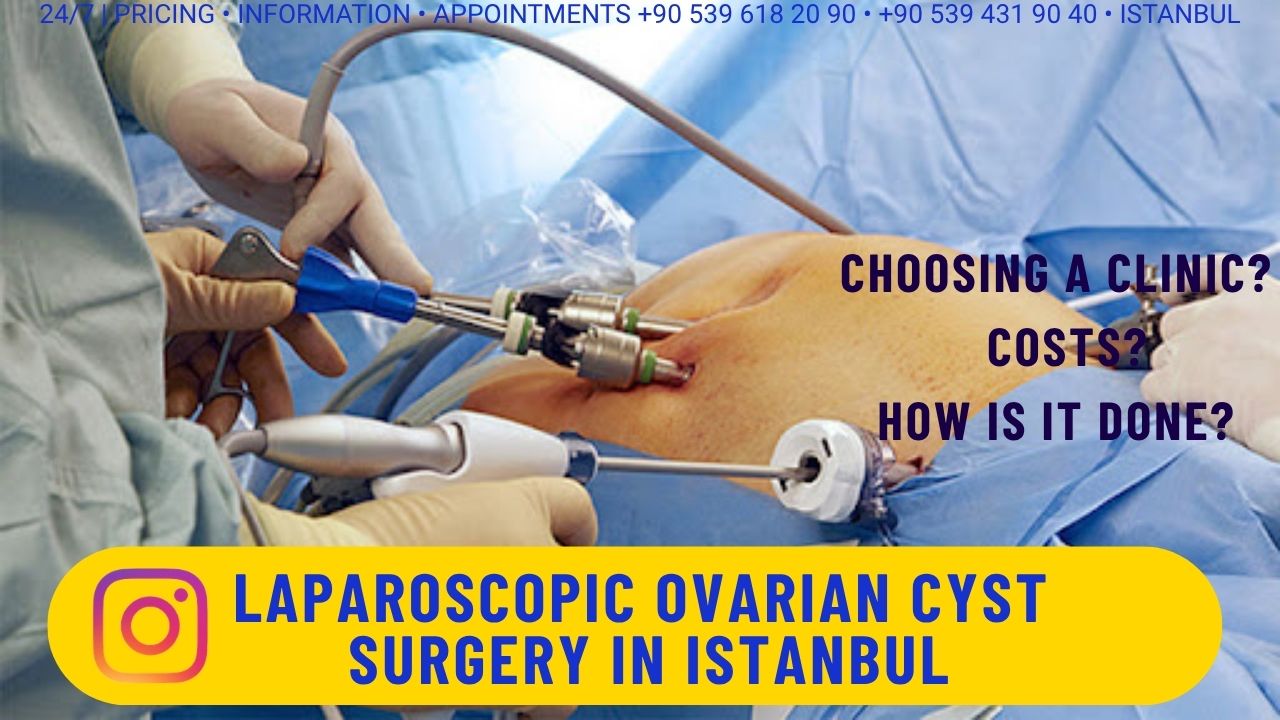
Laparoscopic Ovarian Cystectomy in Istanbul
Medical illustration demonstrating laparoscopic ovarian cystectomy. The procedure is performed through small abdominal incisions using a camera and specialized surgical instruments. The cyst is separated from the surrounding ovarian tissue and removed when appropriate. Laparoscopic surgery may offer a shorter recovery period compared with open surgery in suitable patients.
Frequently Asked Questions About Ovarian Cysts
Are ovarian cysts dangerous?
Most ovarian cysts are benign. However, some may cause complications or require further investigation depending on their appearance, symptoms and the patient’s menopausal status.
Do all ovarian cysts require surgery?
No. Many functional and simple ovarian cysts resolve spontaneously or can be safely monitored. Surgery is considered when clinically indicated.
Can ovarian cysts disappear on their own?
Yes. Many functional cysts resolve over one or more menstrual cycles without surgical treatment.
What is the best treatment for ovarian cysts?
There is no single best treatment for every patient. Management depends on cyst type, ultrasound findings, symptoms, age, menopausal status and reproductive plans.
Is laparoscopic ovarian cyst surgery safe?
Laparoscopic surgery is commonly used for selected benign ovarian cysts. As with every operation, it carries potential risks, which should be discussed during preoperative assessment.
Will my ovary be removed during ovarian cyst surgery?
In many cases, only the cyst is removed and healthy ovarian tissue is preserved. Removal of the entire ovary may be necessary in selected circumstances.
Can ovarian cysts affect fertility?
Some ovarian cysts, particularly endometriomas, may be associated with fertility difficulties. Surgery can also affect ovarian reserve in certain patients. Treatment planning should therefore consider reproductive goals.
What is the difference between an ovarian cyst and an endometrioma?
An endometrioma is a specific type of ovarian cyst associated with endometriosis. Other ovarian cysts may be functional, hemorrhagic, dermoid or epithelial in origin.
How much does ovarian cyst treatment cost in Istanbul?
Ovarian cyst treatment prices in Istanbul start from YYYY USD. The final cost depends on the diagnostic findings and whether surgery is required.
Can international patients have ovarian cyst surgery in Istanbul?
Yes. International patients can arrange a gynecological consultation and share previous ultrasound or MRI reports before traveling to Istanbul, Turkey.
Book Your Ovarian Cyst Consultation in Istanbul, Turkey
If you have been diagnosed with an ovarian cyst, experience pelvic pain or have been advised to consider ovarian cyst surgery, a detailed gynecological evaluation can help determine the most appropriate treatment.
Contact our clinic for information about ovarian cyst diagnosis, laparoscopic cystectomy and gynecological care in Istanbul, Turkey.
WhatsApp / Appointment:
+90 539 618 20 90
+90 539 431 90 40
Gynecology Clinic in Istanbul, Turkey
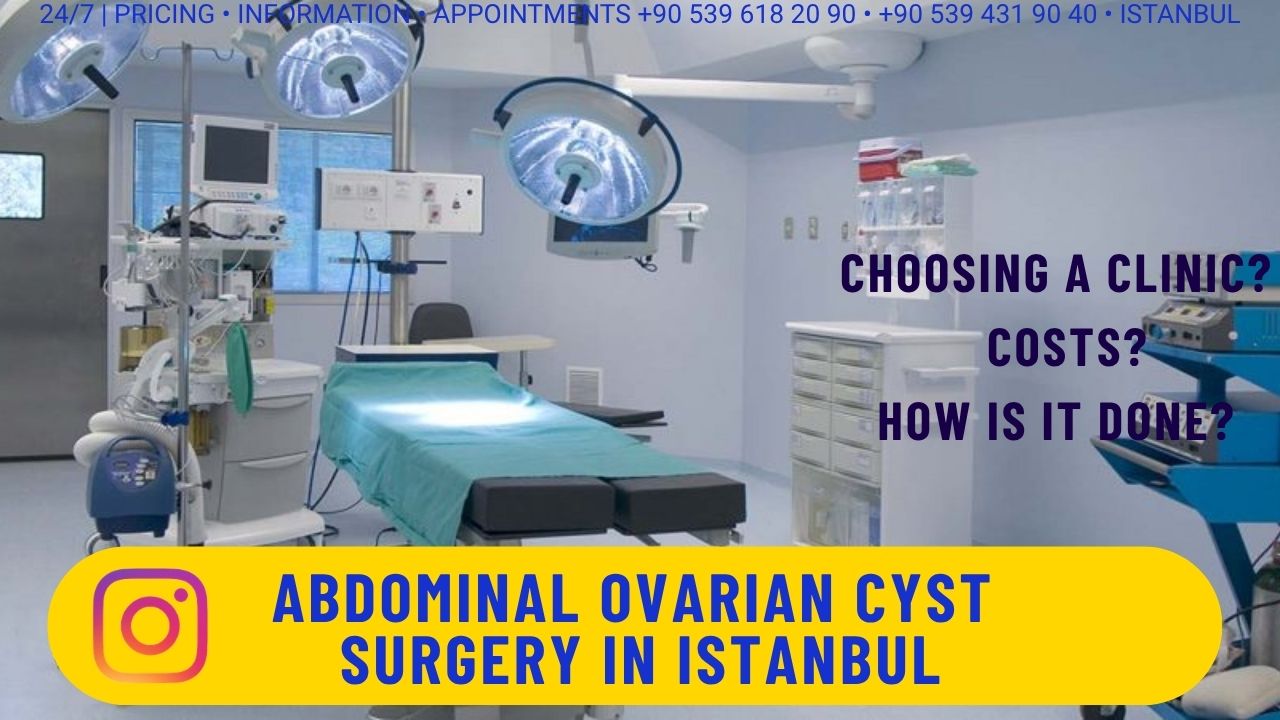
Abdominal Ovarian Cystectomy in Istanbul, Turkey
Abdominal ovarian cystectomy is an open gynecological surgical procedure performed through an incision in the abdominal wall to remove an ovarian cyst. This surgical approach may be considered for large or complex ovarian cysts when laparoscopic surgery is not appropriate. Whenever medically possible, the procedure aims to remove the cyst while preserving healthy ovarian tissue. The surgical technique is selected according to the patient's clinical condition and the characteristics of the ovarian mass.
Planning Ovarian Cyst Treatment in Istanbul?
If you are considering ovarian cyst treatment in Istanbul, you can contact our clinic to discuss your medical needs and appointment planning.
For international patients, consultation, ultrasound assessment, surgical treatment and postoperative care can be planned according to the individual medical situation.
Book a Consultation
Contact Us
Table of Contents
Toggle