Clitoral Hood Reduction in Istanbul, Turkey
Clitoral hood reduction in Istanbul, Turkey is a female genital aesthetic procedure involving the surgical reshaping of selected excess skin folds surrounding the clitoral glans. The procedure may be considered by women who have concerns about prominent clitoral hood tissue, asymmetry, or the appearance of the external genital region.

Clitoral hood reduction, also known as clitoral hoodplasty in Istanbul, Turkey
Medical educational illustration representing clitoral hood reduction surgery in Istanbul, Turkey. The image demonstrates the external genital anatomy and selected tissue areas considered during individualized surgical planning.
Clitoral hood reduction, also known as clitoral hoodplasty, requires detailed knowledge of vulvar anatomy and careful surgical planning. The clitoral hood is closely related to sensitive anatomical structures, and preserving normal sensation and function is a central consideration during surgery.
Depending on individual anatomy, clitoral hood reduction may be performed as a standalone procedure or combined with labiaplasty. However, it is not automatically required during labia minora reduction or other genital aesthetic operations.
Women considering clitoral hood reduction in Istanbul can receive an individualized gynecological assessment to discuss anatomical findings, surgical options, recovery, possible complications, and treatment costs.
What Is Clitoral Hood Reduction?
Clitoral hood reduction is a surgical procedure designed to reshape selected excess skin folds covering or surrounding the clitoral glans.
The clitoral hood is formed by folds of tissue that provide natural coverage and protection for the clitoris. Its size, shape, and degree of coverage vary considerably between individuals.
When anatomically appropriate, surgical correction may involve removing a carefully selected amount of excess hood tissue and reshaping the surrounding skin.
The objectives may include:
Addressing selected clitoral hood prominence
Improving visible asymmetry
Reshaping excess surrounding skin folds
Achieving a more balanced external genital appearance
Maintaining normal clitoral anatomy and sensory function
There is no single ideal clitoral hood appearance. Anatomical variation is normal, and surgery should be based on an informed patient preference and appropriate clinical assessment rather than the assumption that a particular appearance requires correction.
Clitoral Hood Anatomy and Surgical Considerations
The clitoral hood is an anatomical structure formed by skin folds that extend over the clitoral glans. It is closely associated with the clitoris and surrounding vulvar tissues.
The clitoral region contains highly sensitive sensory structures and an important neurovascular supply. Therefore, clitoral hood reduction requires precise anatomical knowledge and conservative tissue management.
Important surgical considerations include:
The relationship between the clitoral hood and clitoral glans
The amount and distribution of excess skin
Natural asymmetry and tissue variation
The location of adjacent sensory structures
Preservation of adequate tissue coverage
Avoidance of excessive skin removal and tension
The surgical objective is not to expose or reduce the clitoris itself. Clitoral hood reduction addresses selected surrounding skin folds while preserving the clitoral glans and its neurovascular structures.
Who May Consider Clitoral Hood Reduction?
Women who are concerned about the appearance of prominent or asymmetrical clitoral hood tissue may request an evaluation.
Potential reasons for consultation include:
Prominent clitoral hood skin folds
Asymmetry of the surrounding tissue
Excess skin that affects the desired external genital contour
Aesthetic concerns involving the clitoral hood region
Requests for combined genital aesthetic surgery
Not every prominent clitoral hood requires surgical correction. The decision should take into account anatomical findings, patient expectations, medical history, and potential surgical risks.
Patients should receive realistic information about the expected changes and the limitations of the procedure before deciding to undergo surgery.
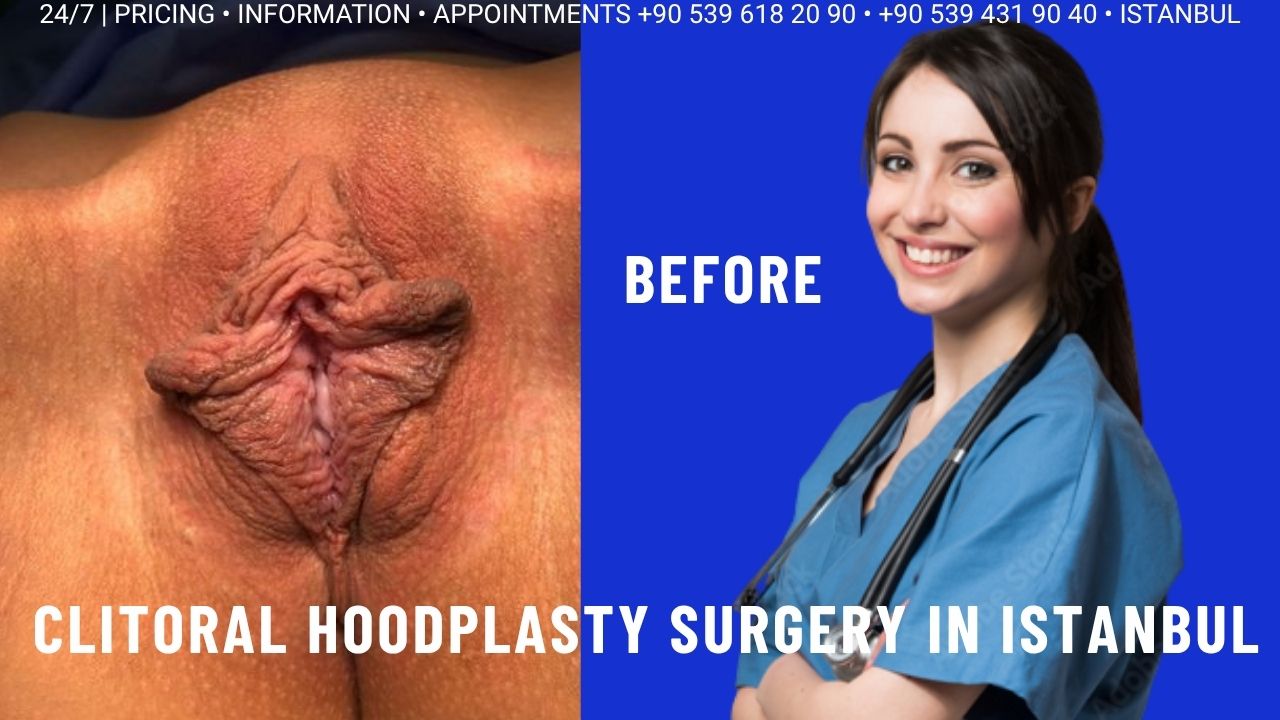
Before and After Clitoral Hoodplasty Surgery in Istanbul, Turkey - BEFORE
Medical educational illustration showing the principles of selective clitoral hood skin reshaping. Surgical planning focuses on appropriate tissue removal, preservation of clitoral anatomy and avoidance of excessive skin excision.
Clitoral Hood Reduction Techniques
The surgical approach depends on the distribution of excess tissue, the patient’s anatomy, and the intended correction.
Selective Tissue Excision
In selected cases, carefully planned removal of excess skin folds may be performed to improve the contour of the clitoral hood.
The amount and location of tissue removal must be individualized. Excessive excision may cause tension, scarring, altered sensation, or inadequate tissue coverage.
Clitoral Hood Reshaping
Some patients require reshaping rather than extensive tissue removal. The surgical plan may focus on correcting selected folds or asymmetry while maintaining the natural anatomical relationship between the clitoral hood and surrounding structures.
No single technique is appropriate for every patient. Surgical planning should prioritize anatomical preservation and functional safety.
Clitoral Hood Reduction and Labiaplasty
Clitoral hood reduction and labiaplasty are separate surgical procedures involving different anatomical structures.
Labiaplasty focuses primarily on reshaping the labia minora, whereas clitoral hood reduction addresses selected skin folds surrounding the clitoral glans.
The two procedures may be combined when both areas have appropriate surgical indications.
However, clitoral hood reduction should not be added automatically to every labiaplasty. The need for each procedure should be evaluated independently.
A combined treatment plan may be discussed as part of broader genital aesthetic surgery in Istanbul, including selected Barbie Vagina Surgery procedures.
Preoperative Assessment
A detailed preoperative gynecological examination is essential before clitoral hood reduction.
The assessment may include:
Medical and surgical history
Evaluation of vulvar and clitoral hood anatomy
Assessment of skin-fold distribution and asymmetry
Review of previous genital procedures
Discussion of aesthetic expectations
Assessment of medications and relevant medical conditions
Appropriate laboratory investigations and anesthesia evaluation
The consultation should include a clear discussion of potential changes in sensation, scarring, healing, and the limitations of surgery.
The final surgical plan should specify which tissue requires correction and which anatomical structures must be preserved.
Clitoral Hood Reduction Procedure in Istanbul
Clitoral hood reduction is performed using an individualized surgical plan and an appropriate anesthesia method.
The procedure may involve:
Preoperative examination and surgical marking.
Selection of the appropriate anesthesia plan.
Preparation of the surgical area under sterile conditions.
Careful identification of the tissue planned for correction.
Selective reshaping or removal of excess skin folds.
Closure using appropriate surgical sutures.
Postoperative observation and follow-up instructions.
The duration of surgery depends on the extent of correction and whether additional procedures, such as labiaplasty, are performed during the same session.
Careful tissue handling and preservation of the clitoral neurovascular structures are essential surgical priorities.
Recovery and Postoperative Care
Recovery following clitoral hood reduction varies according to the surgical technique and whether additional genital aesthetic procedures are performed.
Mild swelling, bruising, tenderness, and temporary sensitivity may occur during the early postoperative period.
General postoperative recommendations may include:
Following prescribed medication instructions
Maintaining appropriate genital hygiene
Avoiding friction and pressure on the surgical area
Wearing comfortable, non-restrictive clothing
Avoiding strenuous physical activity during early healing
Attending scheduled postoperative examinations
Avoiding sexual intercourse until adequate healing is confirmed
Sexual intercourse and activities that place pressure or friction on the surgical area are commonly restricted for approximately 4–6 weeks after genital aesthetic surgery. The exact period depends on the extent of surgery and individual healing.
Patients should follow their surgeon’s instructions and receive medical clearance before resuming sexual activity.
Risks and Possible Complications
Clitoral hood reduction is a delicate surgical procedure and carries potential complications.
Possible risks include:
Bleeding or hematoma
Infection
Wound separation
Delayed wound healing
Scarring
Asymmetry
Excessive or insufficient tissue removal
Persistent pain or discomfort
Altered clitoral or surrounding genital sensation
Increased sensitivity or reduced sensation
Tissue ischemia or necrosis
Unsatisfactory aesthetic results
Need for revision surgery
Excessive tissue removal may affect natural coverage and increase the risk of discomfort or sensory changes.
Careful patient selection, detailed anatomical assessment, conservative tissue management, and appropriate postoperative follow-up are important for reducing avoidable risks.
Patients should understand that no surgical technique can guarantee a specific aesthetic result or eliminate all risks.
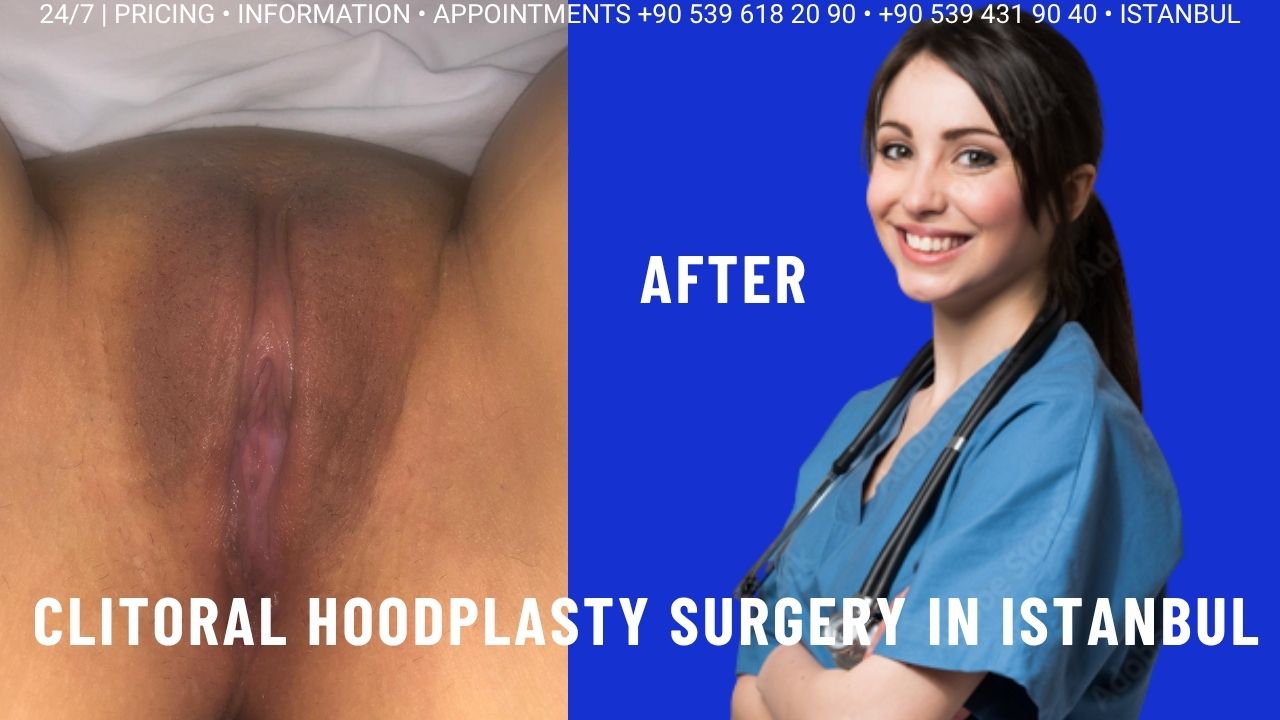
Before and After Clitoral Hoodplasty Surgery in Istanbul, Turkey - AFTER
Medical educational illustration representing postoperative recovery following clitoral hood reduction in Istanbul, Turkey, including tissue healing, genital hygiene, activity restrictions and follow-up care.
Clitoral Hood Reduction Cost and Price in Istanbul, Turkey
The cost of clitoral hood reduction in Istanbul, Turkey depends on the surgical complexity, anesthesia requirements, facility costs, and whether additional procedures are performed.
Factors that may influence the final clitoral hood reduction price include:
Extent of tissue reshaping required
Surgical technique and operating time
Whether labiaplasty is performed simultaneously
Anesthesia requirements
Hospital or clinic facilities
Postoperative care and follow-up arrangements
Clitoral hood reduction performed alone may have a different cost from a combined procedure involving labiaplasty or other genital aesthetic operations.
For an individualized estimate of clitoral hood reduction cost in Istanbul, patients are advised to arrange a gynecological consultation.
International patients can contact the clinic for information about treatment options, consultation arrangements, and estimated surgical costs.
How much do clitoral aesthetic procedures cost?
Clitoral aesthetic surgery prices are generally similar to labia minora aesthetic surgery prices. In Istanbul, clitoris aesthetic surgery prices generally start from 1500 USD. Prices may change if other genital aesthetic surgeries, such as Barbie aesthetics or labia minora aesthetics, are performed together.
When researching the price of clitoral aesthetics (hudoplasty), choosing the right gynecologist and hospital is also an important consideration.
Choosing a gynecologist who is particularly skilled in genital aesthetic surgery and genital laser treatments will give you a significant advantage.
Clitoral Hood Reduction for International Patients
International patients considering clitoral hood reduction in Turkey can arrange an initial consultation and discuss their treatment plan before travelling to Istanbul.
The treatment pathway may include:
Initial communication and review of medical history.
Travel to Istanbul for an in-person gynecological assessment.
Examination and individualized surgical planning.
Surgery when clinically appropriate.
Postoperative observation and follow-up.
Return travel after the treating surgeon confirms that the patient is medically suitable to travel.
The length of stay depends on the procedure, recovery progress, and individual medical circumstances.
Patients should allow sufficient time for postoperative assessment and should not arrange an early return flight without medical clearance.

Guıde For Clitoral Hoodplasty in Istanbul, Turkey
Medical educational illustration showing the principles of selective clitoral hood skin reshaping. Surgical planning focuses on appropriate tissue removal, preservation of clitoral anatomy and avoidance of excessive skin excision. Comparative anatomical medical illustration showing the distinction between the clitoral hood and labia minora. Clitoral hood reduction reshapes selected skin folds around the clitoral glans, whereas labiaplasty focuses on labia minora tissue.
Does Clitoral Aesthetics (Hudoplasty) Increase Sexual Orgasm?
Women experience an increase in sexual orgasm after clitoral aesthetic surgery for two reasons.
In particular, an increase in self-confidence resulting from an aesthetically pleasing genital appearance leads to increased desire and orgasm during sexual intercourse in both men and women.
The second important benefit of clitoral aesthetics is the direct stimulation of the clitoris during sexual intercourse. The clitoral tissue, covered by a thick membrane, may experience stimulation problems due to lack of contact. By correcting the clitoral fold, clitoral stimulation during intercourse becomes stronger and more effective, allowing couples to achieve sexual orgasm more powerfully.
Here, it is important for the surgeon to be experienced and to approach the tissue delicately during the operation, due to the anatomical and functional location of the clitoris.
In summary, when performed with the correct surgical technique, the aesthetic and functional results of clitoral aesthetic surgery (hudoplasty) are extremely satisfying.
Frequently Asked Questions About Clitoral Hood Reduction
What is clitoral hood reduction?
Clitoral hood reduction is a surgical procedure that reshapes selected excess skin folds surrounding the clitoral glans while aiming to preserve normal clitoral anatomy and sensation.
Is clitoral hood reduction the same as clitoridectomy?
No. Clitoral hood reduction involves selected surrounding skin folds. Clitoridectomy refers to removal of clitoral tissue and is a fundamentally different procedure.
Can clitoral hood reduction be combined with labiaplasty?
Yes. The procedures may be performed together when both areas have appropriate indications. However, clitoral hood reduction is not necessary for every labiaplasty patient.
Does clitoral hood reduction affect sensation?
Changes in sensation are possible complications. Because the clitoral region contains highly sensitive structures, careful anatomical assessment and conservative surgical technique are essential.
How long does recovery take?
Initial healing occurs over the first few weeks. Sexual intercourse and activities that create friction are commonly postponed for approximately 4–6 weeks, depending on the procedure and healing progress.
How much does clitoral hood reduction cost in Istanbul?
The price depends on surgical complexity, anesthesia, facility costs, and whether additional procedures are performed. An individualized estimate can be provided following consultation.
Can international patients have clitoral hood reduction in Turkey?
International patients can undergo assessment and, when appropriate, surgery in Turkey. Travel plans should allow sufficient time for postoperative observation and medical clearance.
Book a Clitoral Hood Reduction Consultation in Istanbul
If you are considering clitoral hood reduction in Istanbul, Turkey, a gynecological consultation can help determine whether the procedure is appropriate for your anatomy and expectations.
Contact the clinic for information about clitoral hood reduction surgery, treatment planning, cost, recovery, and appointments for international patients.
Planning Clitoral Hoodplasty in Istanbul?
If you are considering clitoral hoodplasty in Istanbul, you can contact our clinic to discuss your medical needs and appointment planning.
For international patients, consultation, ultrasound assessment, surgical treatment and postoperative care can be planned according to the individual medical situation.
Book a Consultation
Contact Us
Table of Contents
Toggle