Labiaplasty in Istanbul, Turkey
Labiaplasty in Istanbul, Turkey is a gynecological surgical procedure involving the reduction or reconstruction of the labia minora. The procedure is performed to address selected anatomical variations associated with functional discomfort, tissue irritation, asymmetry or persistent aesthetic concerns.
Labiaplasty Surgery in Istanbul, Turkey
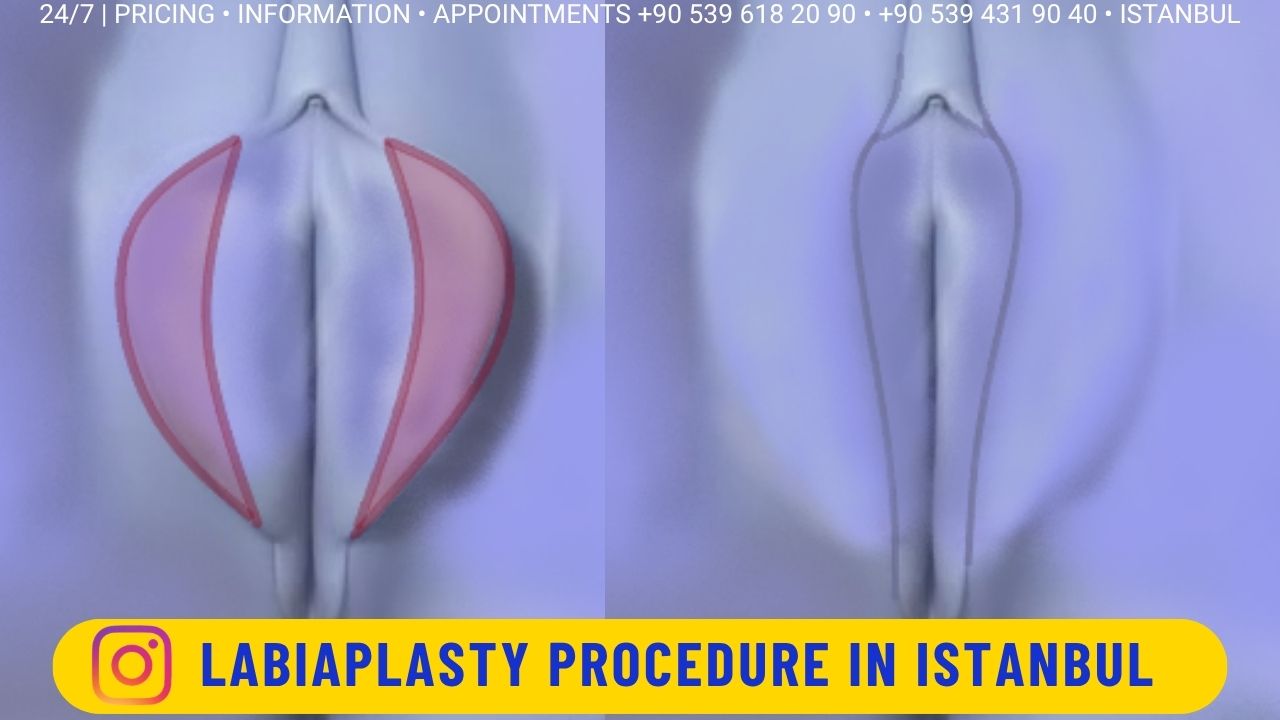
Medical illustration representing labiaplasty surgery in Istanbul, Turkey, showing the female external genital anatomy and the surgical approach to labia minora reduction.
Labiaplasty surgery requires detailed knowledge of vulvar anatomy, vascular supply, sensory innervation and tissue healing. The surgical objective is not simply to reduce labial dimensions, but to achieve appropriate anatomical proportions while preserving tissue integrity, sensitivity and vulvar function.
Women considering labiaplasty in Istanbul should undergo a comprehensive gynecological examination before treatment. Surgical planning must be individualized according to anatomical findings, symptoms, tissue characteristics and patient expectations.
For international patients considering labiaplasty in Turkey, the treatment process should include preoperative assessment, surgical planning, postoperative observation and appropriate follow-up arrangements.
What Is Labiaplasty?
Labiaplasty, also known as labia minora reduction surgery, is a surgical procedure involving the modification of the labia minora, the inner folds of the vulva.
The labia minora demonstrate considerable physiological variation in length, thickness, pigmentation, contour and symmetry. Prominence or asymmetry alone does not constitute a pathological condition or an automatic indication for surgery.
However, selected patients may experience functional symptoms associated with labial anatomy, including mechanical irritation, friction, discomfort during physical activity or pain during sexual intercourse.
The primary surgical objectives of labiaplasty include:
Appropriate reduction of excessive labial tissue when indicated.
Correction of selected anatomical asymmetries.
Preservation of the natural labial contour.
Maintenance of adequate vascularization and tissue viability.
Protection of sensory structures.
Avoidance of excessive tissue removal and functional impairment.
Labiaplasty in Istanbul should therefore be approached as an individualized gynecological surgical procedure rather than a standardized cosmetic intervention.
Medical Indications for Labiaplasty
The decision to perform labiaplasty depends on the patient’s symptoms, anatomical findings and treatment expectations.
Potential indications include:
Having very large labia minora
It is usually a structural condition when the labia minora are too large to be covered by the labia majora. Besides causing visual discomfort in the genital area, the frequent irritation and resulting infections due to the labia minora protruding often lead patients to seek labiaplasty surgery.
Functional Discomfort
Prominent labia minora may cause repeated friction, irritation or mechanical discomfort during exercise, cycling, walking or wearing tight clothing.
Labial Asymmetry
Significant asymmetry may be a reason for consultation when it is associated with persistent functional or personal concerns.
A difference in size between the labia is quite common. Most women don’t have labia that are exactly the same size. However, sometimes the size difference can be excessive, negatively impacting sexual and social life visually. If sagging is also present, the problem can escalate from aesthetic concerns to frequent irritation and subsequent infections.
Mechanical Irritation
Excess labial tissue may become trapped or compressed during certain activities, potentially resulting in recurrent irritation or discomfort.
Sagging of the labia minora
In young people who frequently gain and lose weight, and in women who appear thin due to tissue loss as they age, sagging of the labia minora can occur. This is aesthetically displeasing and bothersome. In women with darker skin, this sagging labia takes on a very dark color, further exacerbating the visual discomfort. Labiaplasty becomes necessary. Sometimes, postpartum injuries, tears resulting from accidents, or other traumas can also cause the labia minora to sag.
Postpartum Anatomical Changes
Pregnancy and vaginal delivery may contribute to changes in vulvar soft tissues. Selected patients may seek surgical assessment for persistent anatomical changes after childbirth.
Aesthetic Concerns
Some patients seek labiaplasty because of persistent concerns about vulvar appearance. A detailed consultation should distinguish normal anatomical variation from conditions that may reasonably benefit from surgery.
Surgical treatment should not be recommended solely to conform to a particular aesthetic standard.
How is labiaplasty surgery performed?
1- The procedure is performed under general or local anesthesia, depending on the patient’s preference. With local anesthesia, the procedure takes approximately 30 minutes. However, general anesthesia may be used for sensitive individuals who may not feel comfortable with local anesthesia.
2. As with all gynecological surgeries, you should refrain from eating and drinking water for four hours before labia minora aesthetic surgery. You should not be menstruating on the day of the labiaplasty. If you are menstruating, bleeding may prevent proper hygiene of the surgical area.
3- You do not need to be hospitalized for labia minora aesthetic surgery. Even if performed under general anesthesia, the patient can be discharged the same day after labiaplasty.
4- In our clinic, labia minora aesthetic surgery stitches are made using subcutaneous dissolvable suture technique, so you will see minimal stitch scarring after the surgery.
With the subcutaneous technique, your healing time is faster and the appearance is not excessively jagged.
5- After labiaplasty surgery, there is no need to remove the stitches; they will dissolve on their own after 7-10 days of tissue healing.
6- You can take a standing shower at home after labiaplasty . We do not recommend using jacuzzis, bathtubs, pools, sexual intercourse, or wearing tight underwear for the first 10 days.
7- After labia minora aesthetic surgery, spotting or bleeding similar to menstrual bleeding is normal.
To prevent swelling after labiaplasty, cold compresses should be applied for 24-48 hours. Otherwise, mild edema may persist for 6-8 weeks. Ice packs should be applied to the vulva alternately every 30-60 minutes. Applying ice should be a routine task for the patient the day after surgery.
8. After labiaplasty, physical activities that cause friction, such as riding a motorcycle or bicycle, should be avoided until the wound has healed.
Preoperative Gynecological Assessment
Preoperative evaluation is a critical component of labiaplasty surgery in Istanbul.
The examination should assess the external genital anatomy and identify factors that may influence surgical planning and postoperative healing.
Clinical assessment may include:
Detailed medical and surgical history.
Review of previous vulvar procedures.
Assessment of labial dimensions, contour and symmetry.
Evaluation of tissue thickness and elasticity.
Examination of the clitoral hood and adjacent structures.
Assessment of skin conditions, inflammation or active infection.
Evaluation of pain, irritation and other functional symptoms.
Discussion of surgical expectations and possible limitations.
Active vulvovaginal infections, dermatological conditions and unexplained vulvar pain should be evaluated and treated appropriately before elective surgery.
Patients should also be assessed for relevant bleeding disorders, medication use, smoking and other factors that may affect anesthesia, wound healing and postoperative recovery.
Labiaplasty Surgical Techniques
The selection of a labiaplasty technique depends on the anatomical configuration of the labia minora, the location of excess tissue, tissue quality and the intended surgical outcome.
The most commonly described approaches include the trim and wedge techniques.
1. Trim Technique – Edge Resection
The trim technique involves longitudinal excision of selected tissue along the free margin of the labia minora.
This approach may be considered when the excess tissue is primarily located along the labial edge.
Potential advantages include:
Direct removal of redundant marginal tissue.
Ability to modify the length and contour of the labial edge.
Relative technical simplicity in appropriately selected cases.
Important surgical considerations include preservation of adequate tissue, maintenance of a natural edge contour and avoidance of excessive resection.
Over-resection may result in an unnatural appearance, tension, wound-healing problems or functional discomfort.
2. Wedge Technique – Central Tissue Resection
The wedge technique involves removal of a selected full-thickness or appropriately planned wedge of tissue from the labia minora, followed by approximation of the remaining edges.
This technique aims to preserve the natural free margin of the labia minora.
Potential advantages include:
Preservation of the native labial edge.
Reduction of selected central tissue redundancy.
Maintenance of the natural pigmentation and contour of the free margin.
The wedge technique requires careful attention to vascular supply, tissue tension and wound closure. Compromised perfusion, excessive tension or inappropriate patient selection may increase the risk of wound separation and healing complications.
3. Individualized Surgical Planning
Neither trim nor wedge labiaplasty is universally superior.
The most appropriate technique depends on the distribution of excess tissue, labial anatomy, clitoral hood configuration and the patient’s clinical requirements.
In selected cases, additional modifications may be considered. However, procedures involving adjacent structures should be performed only when there is a clear anatomical indication and an appropriate surgical plan.
The principal objective of labiaplasty surgery is to preserve healthy vulvar tissue and normal anatomical function.
Clitoral Hood Anatomy and Surgical Considerations
The clitoral hood is anatomically adjacent to the anterior labia minora and contains structures that require particular attention during genital surgery.
Excessive tissue removal or inappropriate extension of incisions toward the clitoral hood may increase the risk of altered sensation, scarring and wound-healing complications.
When labiaplasty is combined with clitoral hood reduction, the indication, anatomical boundaries and additional surgical risks should be assessed separately.
Preservation of the clitoral structures and their neurovascular supply is an essential consideration in surgical planning.
How Is Labiaplasty Surgery Performed?
Labiaplasty is performed in an appropriate clinical or hospital setting under a selected anesthesia method.
The surgical process generally includes:
Preoperative gynecological examination and confirmation of the surgical plan.
Selection of local, regional or general anesthesia according to clinical requirements.
Sterile preparation of the surgical field.
Careful identification and marking of the planned resection boundaries.
Controlled excision or reshaping of selected labial tissue.
Hemostasis and assessment of tissue perfusion.
Layered or appropriate wound closure using suitable surgical sutures.
Postoperative observation and discharge according to clinical assessment.
The extent and duration of surgery depend on the anatomical findings and selected technique.
Labiaplasty Recovery and Postoperative Care
Postoperative recovery following labiaplasty depends on the surgical technique, extent of tissue manipulation and individual wound-healing characteristics.
During the early postoperative period, patients may experience:
Localized edema.
Ecchymosis.
Mild to moderate tenderness.
Temporary sensitivity changes.
Minor spotting or wound discharge.
These findings may occur during normal tissue healing, although progressive swelling, significant bleeding, fever, purulent discharge or increasing pain require medical evaluation.
Postoperative management generally includes:
Appropriate vulvar hygiene and wound care.
Use of prescribed medication when indicated.
Avoidance of friction and direct pressure.
Temporary restriction of strenuous physical activity.
Avoidance of sexual intercourse until adequate wound healing.
Scheduled postoperative examinations.
Sexual intercourse and activities that place tension on the surgical area are commonly restricted for approximately four to six weeks, depending on healing and the surgeon’s assessment.
The patient should not resume these activities solely according to a predetermined calendar date.
Labiaplasty Risks and Surgical Complications
Although labiaplasty is generally performed as an elective procedure, it carries potential surgical complications.
Possible complications include:
Intraoperative or postoperative bleeding.
Hematoma formation.
Surgical site infection.
Wound dehiscence.
Delayed wound healing.
Hypertrophic or symptomatic scarring.
Labial asymmetry.
Excessive or insufficient tissue reduction.
Persistent pain or discomfort.
Altered genital sensation.
Tissue ischemia or necrosis, particularly in cases of compromised vascular supply.
Need for revision surgery.
The risk profile depends on patient selection, anatomical characteristics, surgical technique and postoperative care.
Meticulous surgical planning, preservation of vascularized tissue and avoidance of excessive resection are essential principles.
Patients should receive a clear explanation of potential complications and realistic surgical outcomes before providing informed consent.
Labiaplasty Cost and Price in Istanbul, Turkey
Labiaplasty cost in Istanbul, Turkey depends on the complexity of the procedure, the selected surgical technique and the clinical requirements of each patient.
Labiaplasty price in Istanbul may vary according to:
Trim or wedge surgical technique.
Extent of labial tissue modification.
Additional procedures, if medically indicated.
Type of anesthesia.
Operating room and hospital requirements.
Preoperative assessment.
Postoperative medication and follow-up arrangements.
Patients comparing labiaplasty prices in Turkey should evaluate the medical setting, surgical plan, anesthesia arrangements and postoperative care rather than considering the quoted price alone.
An individualized labiaplasty cost estimate can be provided following clinical assessment and confirmation of the treatment plan.
Labiaplasty in Istanbul for International Patients
Istanbul is an important destination for international patients seeking gynecological surgical procedures.
International patients considering labiaplasty in Istanbul, Turkey should have access to a structured medical process that includes consultation, surgical assessment, treatment planning and postoperative follow-up.
The treatment pathway may include:
Before Traveling to Istanbul
Patients can contact the clinic to discuss their concerns, provide relevant medical information and receive preliminary information about labiaplasty surgery and its estimated cost.
Remote communication does not replace an in-person gynecological examination.
Consultation and Examination in Istanbul
A clinical examination is performed to assess the labial anatomy, determine surgical suitability and select the appropriate technique.
The patient receives information about the procedure, anesthesia, possible complications, recovery and labiaplasty price.
Surgical Treatment
The procedure is performed according to the individualized surgical plan in an appropriate clinical setting.
Postoperative Observation
The patient receives postoperative instructions and undergoes clinical assessment before discharge.
Return Travel and Follow-up
The timing of international travel should be determined according to postoperative findings and the treating physician’s approval.
Patients should allow adequate time for early recovery and understand how to contact the clinic if postoperative concerns arise after returning home.
Frequently Asked Medical Questions About Labiaplasty
Does labiaplasty affect clitoral sensitivity?
Labiaplasty is intended to modify the labia minora rather than the clitoris itself. However, the proximity of the clitoral hood and associated sensory structures requires careful surgical planning. Changes in sensation are possible, particularly if adjacent structures are injured or excessive tissue removal occurs.
Can labiaplasty cause vaginal problems?
Labiaplasty involves the external genital structures and does not directly modify the vaginal canal. However, excessive resection, scarring or wound complications may result in local discomfort and functional problems.
Is the trim or wedge technique better?
Neither technique is appropriate for every patient. Trim labiaplasty may be suitable for selected marginal tissue redundancy, whereas wedge labiaplasty may be considered when preserving the natural labial edge is an important surgical objective.
How long does labiaplasty recovery take?
Initial swelling and tenderness generally improve during the first postoperative weeks. Complete healing and tissue remodeling take longer. Sexual intercourse and strenuous activities should be resumed only after adequate healing and medical approval.
How much does labiaplasty cost in Istanbul?
Labiaplasty cost in Istanbul depends on surgical technique, anesthesia, clinical setting and additional treatment requirements. A specific price should be determined after examination and confirmation of the surgical plan.
Can international patients undergo labiaplasty in Turkey?
Yes, international patients may be evaluated for labiaplasty in Istanbul. Their treatment and travel schedule should be planned according to medical suitability and postoperative recovery requirements.
Does labiaplasty leave scars?
Labiaplasty involves surgical incisions and therefore may result in scars. Scar formation varies between patients. Appropriate incision planning, tissue handling and wound closure are important for satisfactory healing.
Book a Labiaplasty Consultation in Istanbul
Labiaplasty in Istanbul, Turkey requires an individualized gynecological and surgical assessment.
If you are considering labia minora reduction surgery, a consultation can help determine whether the procedure is appropriate, which surgical technique may be suitable and what recovery requirements should be expected.
Contact our clinic to arrange a consultation and receive further information about labiaplasty surgery, treatment planning and labiaplasty cost in Istanbul.
Planning Labiaplasty in Istanbul?
If you are considering labiaplasty in Istanbul, you can contact our clinic to discuss your medical needs and appointment planning.
For international patients, consultation, ultrasound assessment, surgical treatment and postoperative care can be planned according to the individual medical situation.
Book a Consultation
Contact Us
Table of Contents
Toggle